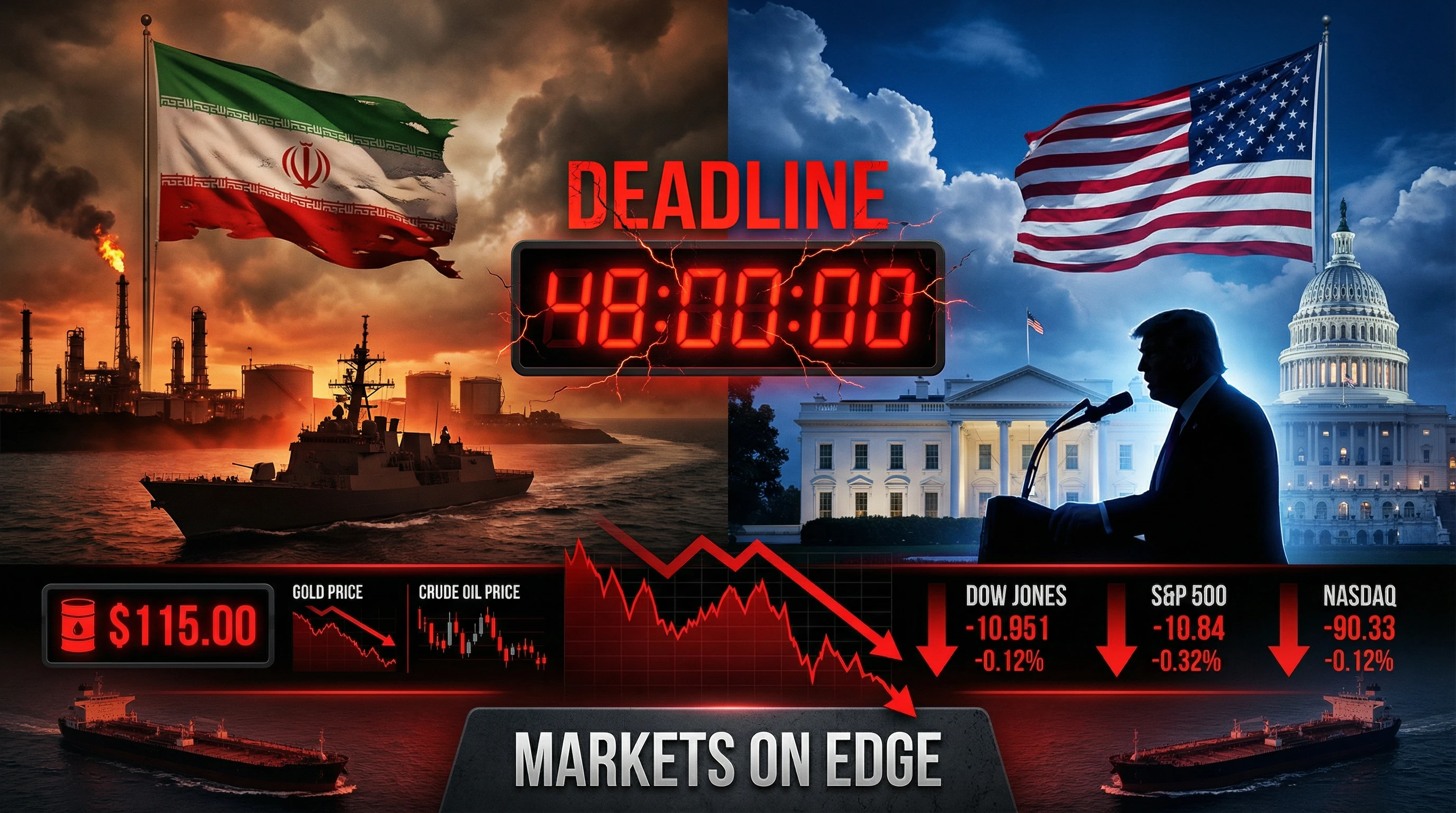
Markets on Edge: Scenarios After Trump's Iran Deadline
ترقب الأسواق على صفيح ساخن: سيناريوهات ما بعد انتهاء مهلة ترامب لإيران
Financial Disclaimer: This article is for educational and informational purposes only. It does not constitute financial or investment advice. All investment decisions are solely your responsibility. Past performance does not guarantee future results.
إخلاء المسؤولية المالية: هذا المقال للأغراض التعليمية والتحليلية فقط، ولا يُعد نصيحة مالية أو استثمارية. قرارات البيع والشراء هي مسؤوليتك الشخصية الكاملة. الأداء السابق لا يضمن النتائج المستقبلية.
Global markets are living in a state of cautious and anxiety-tinged anticipation as the deadline set by US President Donald Trump for Iran approaches. Trump announced in late March 2026 an extension of the deadline for destroying Iranian power plants by ten days, to expire on April 6, 2026, noting that this extension came at the request of the Iranian government to allow room for diplomatic negotiations. This temporary postponement has failed to dispel investor concerns; rather, it has increased the state of uncertainty hanging over global energy and financial markets, especially with the continuation of geopolitical tensions in the Arabian Gulf region and the strategic Strait of Hormuz.
Roots of the Crisis and the American Deadline
The current crisis began escalating with the United States and Israel launching attacks on Iranian targets, prompting Tehran to respond by targeting energy infrastructure in neighboring countries and threatening navigation in the Strait of Hormuz. In an attempt to pressure Tehran, President Trump issued a strongly-worded ultimatum, threatening to strike and destroy Iranian power plants, starting with the largest, if Iran did not fully reopen the Strait of Hormuz.
As the deadline approached, Trump surprised political and economic circles by announcing an extension until April 6, justifying it by the existence of "good and constructive" talks going on behind the scenes. Interpretations of this extension varied; while some see it as reflecting a genuine desire to reach a diplomatic settlement, others believe it is merely a tactical maneuver to buy time, or a response to pressure from regional allies who fear the repercussions of a full-scale war on their economies and infrastructure.
"Based on the Iranian government's request, I am extending the deadline for destroying power plants by ten days, until Monday, April 6, 2026, at 8:00 PM Eastern Time." — Donald Trump
Impact on Global Energy Markets
Energy markets did not wait for the deadline to expire before reacting to the crisis. Crude oil prices saw sharp fluctuations, with futures contracts jumping to record levels exceeding $100 per barrel in some sessions, before retreating slightly with the announcement of the deadline extension. This volatility stems from the enormous strategic importance of the Strait of Hormuz, through which approximately one-fifth of global oil and liquefied natural gas supplies pass.
| Economic Indicator | Observed Impact | Potential Consequences |
|---|---|---|
| Crude Oil Prices | Sharp rises and continued volatility | Possibility of exceeding $150/barrel if Strait of Hormuz fully closes |
| US Gasoline Prices | Exceeded $4/gallon for first time since 2022 | Rising inflation and negative impact on consumer purchasing power |
| Liquefied Natural Gas (LNG) | Supply shortages, especially for Asian and European markets | Rising electricity generation costs and impact on industrial competitiveness |
| Agricultural Fertilizer Prices | Rising costs due to natural gas supply shortages | Rising global food prices |
Three Possible Scenarios After April 6
As zero hour approaches, three main scenarios are crystallizing for the course of the crisis and its impact on markets:
Scenario 1: Diplomatic Settlement (Optimistic Scenario)
This scenario assumes the success of diplomatic efforts, led by third parties such as Pakistan, Turkey, and Qatar, in reaching an agreement satisfactory to both sides. In this case, Iran would guarantee freedom of navigation in the Strait of Hormuz in exchange for easing economic sanctions or providing security guarantees. Market Impact: This scenario would lead to an immediate decline in oil prices and a return of stability to financial markets, with the geopolitical risk premium subsiding.
Scenario 2: Limited Military Escalation (Middle Scenario)
If negotiations fail, the United States may resort to surgical strikes targeting specific Iranian energy facilities, without sliding into a full-scale war. Iran may respond with similar attacks on American or allied targets in the region. Market Impact: This scenario would see a notable rise in oil prices, potentially exceeding $120 per barrel, with increased financial market volatility and investors moving toward safe havens such as gold.
Scenario 3: Full-Scale War and Closure of the Strait of Hormuz (Pessimistic Scenario)
This scenario is the greatest nightmare for global markets. If matters escalate into a large-scale military confrontation, Iran may proceed to fully close the Strait of Hormuz or intensively target Gulf countries' oil infrastructure. Market Impact: This scenario would lead to an unprecedented global energy shock. Experts expect oil prices to jump to levels ranging between $150 and $170 per barrel. This would lead to a global economic recession, a sharp rise in inflation rates, and a collapse in global stock markets.
Conclusion
Global markets stand at a critical crossroads as the American deadline for Iran approaches. Whether the coming days lead to a diplomatic settlement that defuses the crisis, or to military escalation that opens the door to the unknown, what is certain is that the global economy will remain hostage to geopolitical developments in the Gulf region for a period that will not be short. Investors and decision-makers must prepare to deal with all possibilities in an environment characterized by a high degree of fragility and volatility.
المهلة الأمريكية لإيران: العد التنازلي وتأثيره على أسواق النفط والذهب
في تقديري، ومع اقتراب نهاية المهلة التي حددتها الولايات المتحدة لإيران بشأن برنامجها النووي، تتزايد التكهنات حول السيناريوهات المحتملة وتأثيراتها على أسواق الطاقة والمعادن الثمينة، لا سيما النفط والذهب. هذه المهلة، التي تنتهي في أبريل 2026، تضع المنطقة والعالم على أعتاب مرحلة جديدة قد تحمل في طياتها تحولات اقتصادية وجيوسياسية عميقة.
خلفية الأزمة: جذور التوتر بين واشنطن وطهران
تعود جذور التوتر بين الولايات المتحدة وإيران إلى عقود مضت، لكنها تصاعدت بشكل ملحوظ بعد انسحاب واشنطن من الاتفاق النووي الإيراني (خطة العمل الشاملة المشتركة) في عام 2018. منذ ذلك الحين، فرضت الولايات المتحدة عقوبات اقتصادية مشددة على طهران، بهدف تقييد برنامجها النووي والصاروخي، ووقف ما تصفه واشنطن بأنشطتها المزعزعة للاستقرار في المنطقة. في المقابل، ردت إيران بتقليص التزاماتها بموجب الاتفاق النووي، وزيادة تخصيب اليورانيوم، مما أثار قلق القوى العالمية.
السيناريوهات المحتملة وتأثيرها على الأسواق
من خلال متابعتي للسوق، أرى أن المحللين يتوقعون ثلاثة سيناريوهات رئيسية لتطور الأوضاع بعد انتهاء المهلة الأمريكية، لكل منها تداعياته الخاصة على أسواق النفط والذهب:
السيناريو الأول: التوصل إلى اتفاق دبلوماسي... لكن هل هذا يعني نهاية التوترات حقاً؟
في هذا السيناريو، تنجح الجهود الدبلوماسية في التوصل إلى اتفاق جديد أو إحياء الاتفاق النووي السابق، مع بعض التعديلات التي ترضي الطرفين. تأثير الأسواق: من المتوقع أن يؤدي هذا السيناريو إلى استقرار في أسواق النفط، مع احتمال انخفاض الأسعار بشكل طفيف مع عودة النفط الإيراني إلى الأسواق العالمية. أما بالنسبة للذهب، فقد يشهد تراجعاً مع انحسار حالة عدم اليقين الجيوسياسي وتوجه المستثمرين نحو الأصول ذات المخاطر الأعلى.
السيناريو الثاني: استمرار الوضع الراهن مع تصعيد محدود (السيناريو الوسطي)
يفترض هذا السيناريو عدم التوصل إلى اتفاق، لكن دون تصعيد عسكري واسع النطاق. قد يشمل ذلك استمرار العقوبات، مع مناوشات محدودة في المنطقة أو هجمات إلكترونية متبادلة. تأثير الأسواق: سيؤدي هذا السيناريو إلى استمرار حالة التقلب في أسواق النفط، مع بقاء الأسعار عند مستويات مرتفعة نسبياً بسبب المخاوف المستمرة بشأن الإمدادات. أما الذهب، فسيحافظ على جاذبيته كملاذ آمن، وقد يشهد ارتفاعاً تدريجياً مع استمرار التوترات. قد يشهد هذا السيناريو ارتفاعاً ملحوظاً في أسعار النفط، قد يتجاوز 120 دولاراً للبرميل، مع زيادة تقلبات الأسواق المالية وتوجه المستثمرين نحو الملاذات الآمنة، وعلى رأسها الذهب الذي يظل ملاذاً تقليدياً للمصريين في الصاغة.
السيناريو الثالث: الحرب الشاملة وإغلاق مضيق هرمز (السيناريو المتشائم، والذي أخشاه بناءً على سنوات خبرتي في تحليل الأسواق)
يعد هذا السيناريو الكابوس الأكبر للأسواق العالمية. فإذا تطورت الأمور إلى مواجهة عسكرية واسعة النطاق، قد تعمد إيران إلى إغلاق مضيق هرمز بالكامل أو استهداف البنية التحتية النفطية لدول الخليج بشكل مكثف. تأثير الأسواق:
سيؤدي هذا السيناريو إلى صدمة طاقة عالمية غير مسبوقة. يتوقع الخبراء أن تقفز أسعار النفط إلى مستويات تتراوح بين 150 و170 دولاراً للبرميل. سيؤدي ذلك إلى ركود اقتصادي عالمي، وارتفاع حاد في معدلات التضخم، وانهيار في أسواق الأسهم العالمية.
ماذا يعني هذا للمستثمر المصري في ظل هذه التحديات؟ وهل نحن مستعدون؟
بناءً على خبرتي، وبالنظر إلى الأوضاع الراهنة، فإن المستثمر المصري يقف أمام تحديات وفرص في آن واحد. فالاقتصاد المصري، الذي يعتمد بشكل كبير على واردات الطاقة، ومع تقلبات سعر الجنيه المصري، سيكون متأثراً بشكل مباشر بأي ارتفاع في أسعار النفط والغاز. هذا يعني زيادة في تكلفة الإنتاج الصناعي، وارتفاع أسعار السلع والخدمات، ما قد يؤثر على الشركات المحلية ويضغط على ميزانيات الأسر.
لكن دعنا نكن صريحين، الصورة ليست وردية تماماً، ومن جهة أخرى قد يفتح هذا الوضع فرصاً استثمارية في القطاعات المرتبطة بالطاقة المتجددة والتكنولوجيا البديلة، حيث تتجه الحكومات والمؤسسات إلى تقليل الاعتماد على الوقود الأحفوري. كما يمكن للمستثمرين الانتباه إلى الشركات التي تعمل في مجال كفاءة الطاقة أو الخدمات اللوجستية التي تستفيد من التقلبات في أسعار الطاقة.
في تقديري، نصيحتي للمستثمر المصري هي ضرورة التنويع في المحفظة الاستث مارية والابتعاد عن التركيز المفرط على القطاعات الحساسة لتقلبات أسعار الطاقة. كما ينبغي متابعة التطورات السياسية عن كثب والتعامل بحذر مع أي استثمارات طويلة الأجل في البيئات الجيوسياسية غير المستقرة. كذلك، يُنصح بالاحتفاظ بجزء من السيولة للاستفادة من الفرص التي قد تظهر في حالات الانخفاضات الحادة للأسواق.
خلاصة
لفت انتباهي أن الأسواق العالمية تقف على مفترق طرق حاسم مع اقتراب انتهاء المهلة الأمريكية لإيران. وسواء أفضت الأيام القليلة القادمة إلى تسوية دبلوماسية تنزع فتيل الأزمة، أو إلى تصعيد عسك ري يفتح الباب أمام المجهول، فإن المؤكد هو أن الاقتصاد العالمي سيبقى رهينة للتطورات الجيوسياسية في منطقة الخليج لفترة ليست بالقصيرة. هذه الأزمة تعيد إلى الواجهة أهمية الاستقرار السياسي في ضمان استدامة أسواق الطاقة والاقتصادات العالمية.
والأهم من ذلك، بالنسبة للمستثمرين، خاصة في الأسواق الناشئة مثل مصر، فإن الوقت الحالي يتطلب يقظة عالية واستراتيجية استثمارية مرنة قادرة على التكيف مع المتغيرات. فالاستعداد لمواجهة مختلف السيناريوهات، سواء كانت إيجابية أو سلبية، هو السبيل الأمثل للحفاظ على رأس المال وتعظيم العوائد في ظل بيئة اقتصادية متقلبة ومشحونة بالتوترات الجيوسياسية.
في النهاية، تبقى الحكمة في اتخاذ قرارات مدروسة، مبنية على فهم عميق للسياق السياسي والاقتصادي، مع متابعة مستمرة للتطورات، لضمان قدرة المستثمرين على الصمود وتحقيق النجاح في ظل تحديات المستقبل غير المضمونة.


Reader Comments تعليقات القراء
Leave a Comment اترك تعليقاً
Loading comments...
جارٍ تحميل التعليقات...