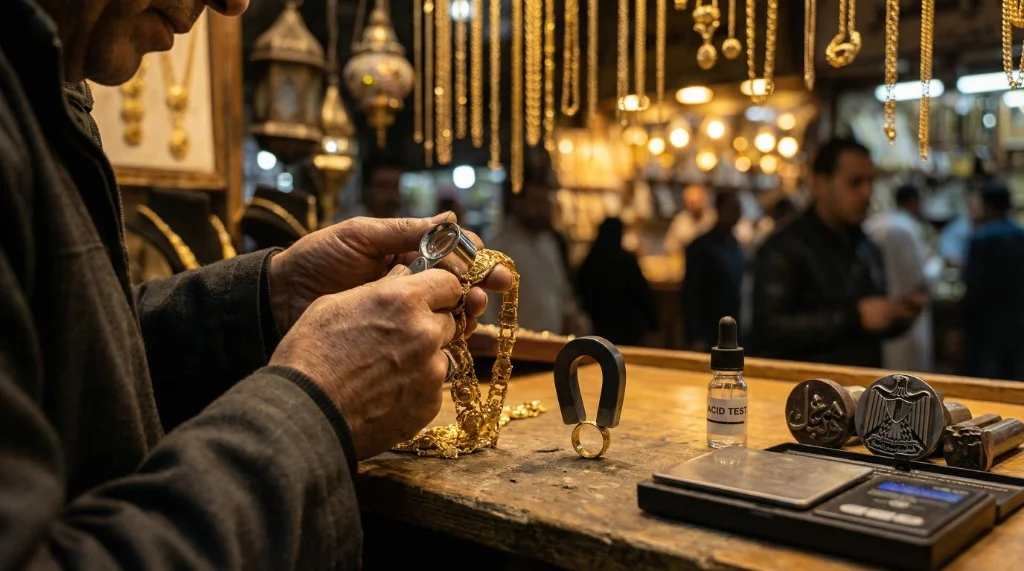
Professional Guide: How to Spot Fake Gold in the Egyptian Market
دليل المحترفين: كيف تكتشف الذهب المغشوش في السوق المصري
Financial Disclaimer: This article is for educational and informational purposes only. It does not constitute financial or investment advice. All investment decisions are solely your responsibility. Past performance does not guarantee future results.
إخلاء المسؤولية المالية: هذا المقال للأغراض التعليمية والتحليلية فقط، ولا يُعد نصيحة مالية أو استثمارية. قرارات البيع والشراء هي مسؤوليتك الشخصية الكاملة. الأداء السابق لا يضمن النتائج المستقبلية.
The Egyptian gold market, while vibrant and deeply embedded in the culture, is unfortunately not immune to fraud. Counterfeit gold — ranging from gold-plated base metals to under-karated pieces — costs Egyptian investors millions of pounds every year. Whether you are buying from a licensed jeweler in Khan El-Khalili or a private seller, knowing how to verify the authenticity of gold is an essential skill that every investor must develop.
1. Check for Official Hallmarks
The first and most fundamental step is to look for the official Egyptian government hallmark stamped on the piece. In Egypt, gold is regulated by the Ministry of Supply and Internal Trade, and all legally sold gold must carry a stamp indicating its purity. The standard stamps are: 999 or 24K for pure gold, 875 for 21-karat gold, 750 for 18-karat gold, and 585 for 14-karat gold. The hallmark should be clear, deep, and consistent. A blurry, shallow, or inconsistent stamp is a major red flag. Be aware that sophisticated counterfeiters can fake hallmarks, so this test alone is not sufficient.
2. The Magnet Test
Pure gold is not magnetic. If you hold a strong neodymium magnet near a piece of gold and it is attracted to the magnet, the piece contains ferromagnetic metals such as iron or nickel — a clear sign it is not genuine gold. However, this test has limitations: some gold-plated items use non-magnetic base metals like copper or brass, which would also not react to the magnet. A negative magnet test is a necessary but not sufficient condition for authenticity.
3. The Acid Test (Nitric Acid Test)
The acid test is one of the most reliable methods used by professional gold dealers in Egypt. It involves making a small scratch on the piece (usually in an inconspicuous area) and applying a drop of nitric acid. Genuine gold will not react to nitric acid — the scratch will remain unchanged. Base metals will turn green or brown, and gold-plated items will reveal the base metal underneath. Acid test kits are available at most jewelry supply stores in Egypt and are an excellent investment for anyone buying gold regularly. Always use protective gloves and eyewear when performing this test.
4. The Density Test
Gold is one of the densest metals on earth, with a density of approximately 19.3 grams per cubic centimeter. This is significantly denser than most common metals used in counterfeits (copper: 8.9, brass: 8.5, lead: 11.3). The density test involves weighing the piece on a precise digital scale, then measuring its volume by water displacement (Archimedes' principle), and calculating the density. If the calculated density is significantly lower than 19.3 g/cm³, the piece is not pure gold. This test is particularly effective for detecting tungsten-filled gold bars, as tungsten (19.3 g/cm³) has nearly the same density as gold — but tungsten-filled bars can be detected by drilling or ultrasound testing.
5. The Ceramic Scratch Test
Drag the piece across an unglazed ceramic plate (the back of a ceramic tile works well). Genuine gold will leave a golden yellow streak. Fake gold or gold-plated items will typically leave a black streak. This is a quick, non-destructive test that can be performed easily. However, it may leave a small scratch on the gold piece, so use it on an inconspicuous area.
6. Professional XRF Testing
For large purchases, the gold standard (no pun intended) of verification is X-Ray Fluorescence (XRF) testing. XRF analyzers can determine the exact elemental composition of a metal piece non-destructively in seconds. Many reputable gold dealers and assay offices in Egypt now offer XRF testing services. If you are buying a significant quantity of gold — particularly bullion bars — insisting on an XRF test is a prudent and increasingly common practice.
7. Buy from Licensed, Reputable Dealers
The most effective protection against fake gold is to purchase exclusively from licensed, established dealers with a verifiable track record. In Egypt, look for dealers who are members of the Gold Division of the Federation of Egyptian Chambers of Commerce. Always demand a detailed receipt that includes the seller's name, date, weight, purity, price per gram, and total price. This receipt is your legal protection and is essential for any future resale or dispute resolution.
By combining several of these verification methods and exercising caution about deals that seem too good to be true, Egyptian investors can significantly reduce their risk of falling victim to gold fraud. When in doubt, always consult a professional assayer before completing a large purchase.
يُعد سوق الذهب في مصر من أعرق الأسواق وأكثرها حيوية، إذ يرتبط بمجتمعنا ارتباطاً وثيقاً يمتد لقرون. الذهب ليس مجرد سلعة اقتصادية بل جزء من تراثنا وثقافتنا، يستخدم في المناسبات والأعراس والاستثمارات على حد سواء. ومع ذلك، فإن هذا السوق الواسع ليس بمنأى عن عمليات الغش والاحتيال التي تستهدف المستثمرين والمشترين العاديين على حد سواء. فالذهب المغشوش، سواء كان معدناً مطلياً أو قطعاً مختلطة بمعادن أقل قيمة، يسبب خسائر مالية فادحة للمستهلكين الذين يثقون دون تحري دقيق. لذلك، فإنّ إتقان مهارات التحقق من أصالة الذهب في السوق المصري، يعد ضرورة لا غنى عنها لكل من يرغب في حماية أمواله واستثماراته.
١. تحقق من الطوابع الرسمية
أول وأهم خطوة لأي مشتري هي التأكد من وجود الطابع الرسمي الذي تفرضه وزارة التموين والتجارة الداخلية على جميع قطع الذهب التي تُباع في السوق المصري. هذه الطوابع ليست مجرد علامات عشوائية، بل هي دليل على نقاء الذهب وعياره الفعلي. الطوابع المعروفة في مصر تشمل ٩٩٩ أو ٢٤ قيراط للذهب الخالص، و٨٧٥ لعيار ٢١، و٧٥٠ لعيار ١٨، و٥٨٥ لعيار ١٤.
يجب أن يكون الطابع واضحاً، عميق النقش، ومتسقاً مع نوع القطعة. الطابع الباهت أو الضحل أو المفقود يثير الشكوك حول أصالة القطعة. وفي بعض الأحيان، يحاول المحتالون طباعة أو نقش طوابع مزيفة، لذلك لا يعتمد فقط على وجود الطابع، بل يجب أن تلمس جودة النقش وتفحصه بدقة.
٢. اختبار المغناطيس: سلاحك البسيط في الكشف
الذهب الحقيقي معدن لا يجذب المغناطيس، لذا فإن استخدام مغناطيس قوي يتيح لك اختباراً سريعاً ومجانياً في المنزل أو في المحل. كل ما عليك فعله هو تقريب المغناطيس من القطعة الذهبية، فإذا انجذبت إليها القطعة، فهذا دليل قوي على احتوائها على معادن مغناطيسية مثل الحديد أو النيكل، مما يعني أنها ليست نقية أو مزيفة بالكامل.
لكن يجدر التنويه إلى أن عدم انجذاب القطعة للمغناطيس لا يعني بالضرورة أنها ذهب خالص. فقد تكون القطعة مصنوعة من معادن أخرى غير مغناطيسية، أو ذهب مطلي على معدن خفيف. لذا، لا تعتمد على هذا الاختبار وحده، بل اجعله خطوة أولى ضمن سلسلة اختبارات متعددة.
٣. اختبار الحمض (حمض النيتريك) وأهميته العملية
يعتبر اختبار الحمض من أكثر الطرق دقة المستخدمة على نطاق واسع في محلات الذهب المصرية. تقوم هذه الطريقة على وضع نقطة صغيرة من حمض النيتريك على خدش غير ظاهر في القطعة. الذهب الحقيقي لا يتفاعل مع الحمض، ويبقى الخدش كما هو، بينما المعادن الأخرى تتفاعل بسرعة وتغير لونها إلى الأخضر أو البني الداكن أو الأسود.
هذه الطريقة ليست مدمرة، ولكن يجب أن تتم بحذر شديد لتجنب تلف القطعة، ويفضل أن يقوم بها فني مختص. مجموعات اختبار الحمض متاحة في السوق المحلي بأسعار معقولة، وهي أداة مهمة لكل مستثمر جاد يريد التأكد من قيمة استثماره.
٤. اختبار الكثافة والوزن النوعي: معرفة الذهب بعينيك ويديك
الذهب معدن ثقيلي جداً، بكثافة تصل إلى 19.3 جرام لكل سنتيمتر مكعب، وهي كثافة أعلى بكثير من معظم المعادن الأخرى التي قد تستخدم في الغش مثل النحاس أو الرصاص. لذلك، يعد اختبار الكثافة من الطرق الدقيقة التي يمكن للمشتري تطبيقها بسهولة نسبياً.
يمكنك استخدام ميزان رقمي دقيق وكوب من الماء لإجراء هذا الاختبار في المنزل. قم بقياس وزن القطعة جافاً، ثم قم بقياس وزنها وهي مغمورة بالكامل في الماء باستخدام خيط رفيع لتعليقها. الفرق بين الوزن الجاف والوزن في الماء يسمح لك بحساب حجم القطعة، ومنه الكثافة. إذا كانت الكثافة أقل بكثير من 19.3، فهناك شك كبير في نقاء القطعة.
هذه الطريقة تحتاج بعض الخبرة والدقة في القياس، لكنها تمنحك مؤشراً قوياً على جودة الذهب الذي تشتريه.
٥. اختبار الخزف: أبسط وأسرع اختبار منزلي
إذا لم تتوفر لديك أدوات متقدمة، يمكنك إجراء اختبار الخزف السريع. يكفي أن تسحب القطعة على لوح خزفي غير مصقول (مثل ظهر بلاطة خزفية). الذهب الحقيقي يترك خطاً أصفر ذهبياً، بينما الذهب المغشوش أو المطلي يترك عادةً خطاً أسود أو رمادياً. هذه الطريقة بسيطة وغير مكلفة، لكنها تحتاج إلى حذر حتى لا تتلف القطعة، خصوصاً إذا كانت ثمينة.
٦. الفحص الاحترافي باستخدام أجهزة الأشعة السينية الفلورية (XRF)
مع تقدم التكنولوجيا، أصبحت أجهزة تحليل المعادن بالأشعة السينية الفلورية (XRF) متاحة لدى العديد من محلات الصاغة الكبرى في مصر. هذه الأجهزة تقدم فحصاً دقيقاً وغير مدمر يحدد بدقة نسبة الذهب والمعادن المضافة في القطعة. يمكن لهذا الفحص كشف أي تلاعب أو خلط غير معلن، وهو أمر حاسم عند شراء السبائك أو العملات الذهبية ذات القيمة العالية.
لا تتردد في طلب هذا الفحص قبل إتمام أي صفقة كبيرة، فتكلفته بسيطة مقارنة بما قد تخسره لو اشتريت قطعة مغشوشة.
٧. الشراء من تجار موثوقين ومرخصين: ضمان السلامة القانونية
أفضل طريقة لحماية نفسك من عمليات الغش هي التعامل مع تجار الذهب المرخصين والمعروفين بسمعتهم الطيبة. في مصر، يمكنك التأكد من أن التاجر عضو في شعبة الذهب التابعة للاتحاد العام لغرف التجارة المصرية. كما يجب أن تحصل على إيصال مفصل يشمل اسم التاجر، تاريخ الشراء، الوزن، العيار، والسعر لكل جرام والسعر الإجمالي.
هذه الوثائق ليست مجرد ورق، بل هي الحماية القانونية التي تضمن حقك في حال حدوث أي نزاع أو رغب في إعادة البيع أو التقييم المستقبلي.
تحليل أعمق: لماذا تكثر عمليات الغش في سوق الذهب المصري؟
يرجع ارتفاع معدلات الغش في سوق الذهب المصري إلى عدة عوامل متشابكة. أولاً، ارتفاع أسعار الذهب عالمياً يجعل من الذهب هدفاً مغرياً للمحتالين الذين يحاولون تحقيق أرباح سريعة عبر الغش أو خلط الذهب بمعادن أقل تكلفة. ثانياً، ضعف الرقابة في بعض المناطق والأسواق الشعبية مثل خان الخليلي حيث يتواجد عدد كبير من الباعة غير الرسميين أو من ذوي الخبرة المحدودة في الكشف عن الغش.
بالإضافة إلى ذلك، هناك قلة وعي المستهلكين الذين يفتقدون المعرفة التقنية اللازمة لفحص الذهب، مما يجعلهم ضحايا سهلة. لذلك، يمثل التعليم والتوعية المستمرة للمستهلكين عن طرق الكشف من أهم الحلول للحد من هذه الظاهرة.
أمثلة عملية: قصص واقعية تحذيرية
في إحدى الحالات الشهيرة بالقاهرة، اشتريت سيدة قطعة ذهبية من أحد الأسواق الشعبية بأسعار منخفضة جداً مقارنة بالسوق الرسمي. بعد فترة قصيرة، لاحظت أن القطعة تغير لونها وبدأت تظهر عليها بقع سوداء. عند فحص القطعة في محل معتمد، تبين أنها مطلية بالذهب فقط وأن المعدن الأساسي كان من النحاس. خسرت السيدة جزءاً كبيراً من أموالها بسبب جهلها بطرق الكشف.
في حالة أخرى، قام مستثمر صغير بشراء سبيكة ذهب من تاجر غير مرخص عبر الإنترنت دون إجراء فحص دقيق. بعد مراجعة مختبر متخصص، تبين أن السبيكة تحتوي على نسبة ذهب أقل من العيار المعلن. هذه الحالات تكررت كثيراً وتبرز أهمية الحذر والفحص الدقيق.
نصائح للمستثمر المصري: كيف تحمي استثمارك؟
- تعلم أساسيات الفحص: لا تعتمد فقط على البائع أو السعر، بل تعلم كيفية إجراء الاختبارات البسيطة مثل اختبار المغناطيس والحمض.
- الاستعانة بمحكمين محترفين: في حالة الشراء بكميات كبيرة أو قطع ذات قيمة عالية، استشر دائماً مختصين أو مختبرات معتمدة.
- الاحتفاظ بالوثائق: لا تستهين بأهمية الفواتير والإيصالات المفصلة، فهي ضمانك القانوني ومرجعك في المستقبل.
- تجنب العروض المغرية جداً: السعر المنخفض بشكل غير منطقي غالباً ما يكون فخاً، فلا تقع فيه.
- تابع أسعار الذهب العالمية والمحلية: يساعدك ذلك في تقدير الأسعار الحقيقية وعدم الانخداع بالعروض.
ماذا يعني هذا للمستثمر المصري؟
بالنسبة للمستثمر المصري، الذهب ليس فقط وسيلة لحفظ القيمة، بل هو استثمار طويل الأمد وملاذ آمن في أوقات التقلبات الاقتصادية. لكن الاستثمار الناجح يتطلب معرفة دقيقة بالسوق وبطرق التحقق من الجودة. عدم إتقان هذه المهارات يعرض المستثمر لخسائر مالية قد تكون كبيرة، ويقلل من عائد الاستثمار ويجعله عرضة للنصب.
فهم أدوات الكشف عن الذهب المغشوش يمكن أن يرفع من وعي المستثمر ويمنحه ثقة أكبر عند اتخاذ قرارات الشراء. كما أن التعامل مع تجار موثوقين وطلب الفحوصات الاحترافية يعزز من حماية رأس المال ويحول دون تعرضه للمخاطر غير الضرورية. في النهاية، المستثمر الذكي هو الذي يوازن بين السعر والقيمة والجودة، ولا يسمح أبداً للجشع أو العروض المغرية بإغراءه على حساب أمواله.
خلاصة
سوق الذهب المصري مليء بالفرص، لكنه أيضاً محفوف بالمخاطر، خصوصاً خطر الوقوع في فخ الذهب المغشوش. لا توجد طريقة واحدة كافية للتحقق من أصالة الذهب، بل يجب استخدام مجموعة من الطرق بدءاً من فحص الطوابع الرسمية، مروراً بالاختبارات البسيطة مثل المغناطيس والحمض والخزف، وصولاً إلى الفحوصات الاحترافية مثل جهاز الأشعة السينية الفلورية.
الأهم من ذلك هو اختيار التاجر المناسب، والاعتماد على الوثائق الرسمية، وتجنب الصفقات التي تبدو جيدة أكثر من اللازم. المعرفة والوعي هما درعك الأول والأخير لحماية استثمارك في الذهب، وهذا ما يحول بينك وبين خسائر قد تكون مفجعة. في النهاية، الذهب الحقيقي لا يحتاج إلى خداع، وإنما إلى فحص دقيق وتقدير حقيقي لقيمته.




Reader Comments تعليقات القراء
Leave a Comment اترك تعليقاً
Loading comments...
جارٍ تحميل التعليقات...