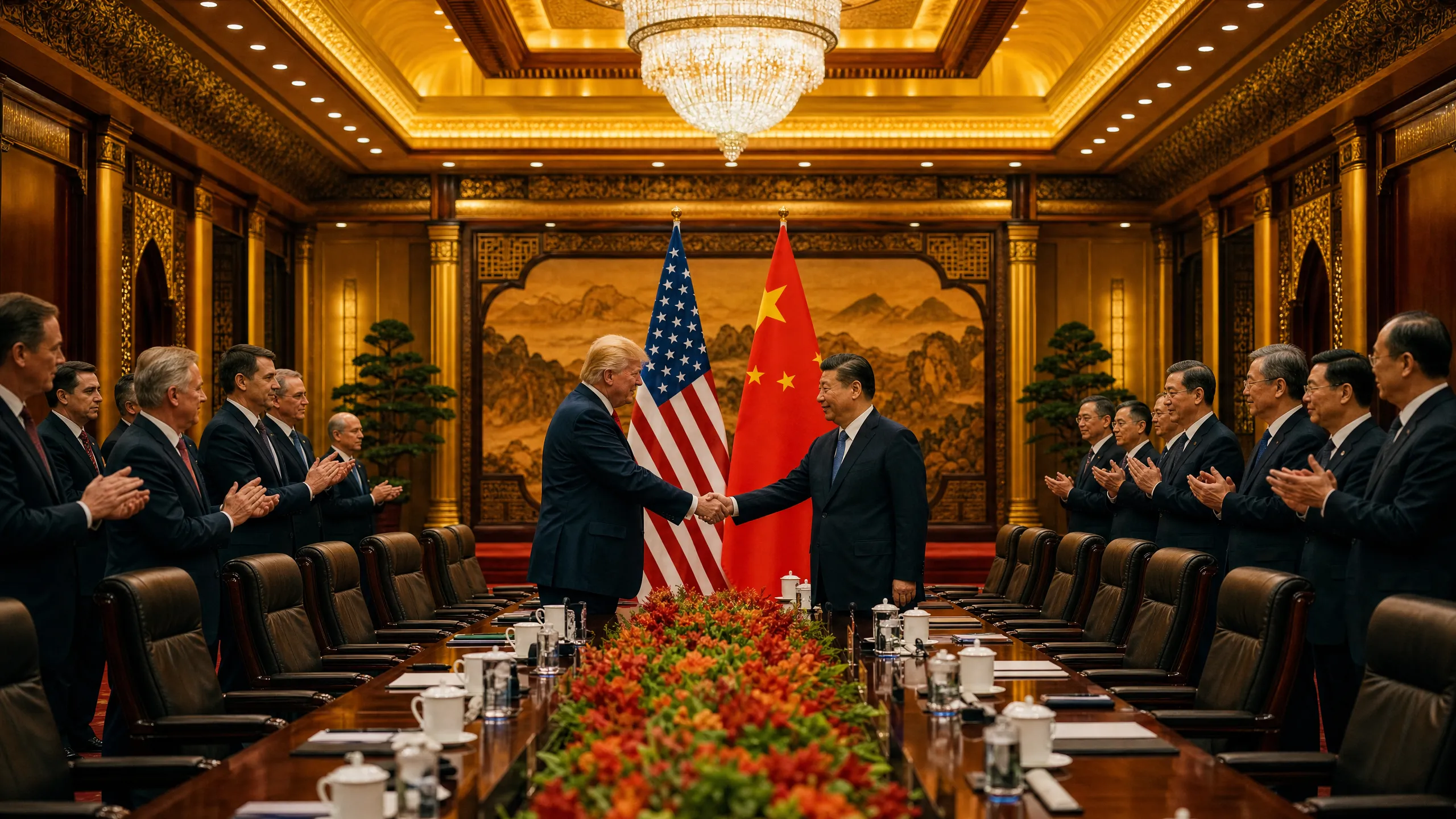
Trump-Xi Summit in Beijing: Economic Deals and Political Balances Shaping the Future
قمة ترامب وشي في بكين: صفقات اقتصادية وتوازنات سياسية ترسم ملامح المستقبل
Financial Disclaimer: This article is for educational and informational purposes only. It does not constitute financial or investment advice. All investment decisions are solely your responsibility. Past performance does not guarantee future results.
إخلاء المسؤولية المالية: هذا المقال للأغراض التعليمية والتحليلية فقط، ولا يُعد نصيحة مالية أو استثمارية. قرارات البيع والشراء هي مسؤوليتك الشخصية الكاملة. الأداء السابق لا يضمن النتائج المستقبلية.
Trump and Xi Summit in Beijing: Economic Deals and Political Balances Shape the Future
In my estimation, U.S. President Donald Trump's visit to Beijing, his first since 2017, was a historic event by all measures. Trump met with his Chinese counterpart Xi Jinping at a three-day summit (May 14-15, 2026). After years of trade and political tensions, this summit highlighted the complex relationship between the world's two largest economies. I believe that economic interests here are inextricably intertwined with political and strategic contradictions. This visit, from my market observations, was the focus of the entire world, given the immense impact of U.S.-China relations on the global economy and international security.
Context of the Visit: From Tension to Seeking Common Ground
This visit comes at a highly critical time for the global economy, which, as we observe in our local markets, continues to suffer from the repercussions of successive crises and geopolitical tensions. In recent years, relations between Washington and and Beijing have witnessed an unprecedented escalation, characterized by reciprocal tariffs, restrictions on technology exports, and military tensions in the South China Sea. But was this escalation sustainable? In my view, both sides realized that continuing on this path could lead to severe, uncontrollable consequences, which neither party desires.
Therefore, this summit emerged as a serious attempt to find common ground and manage competition in a way that prevents an escalation into open conflict. President Trump clearly expressed this approach when he indicated his desire to strike "great deals" with China, emphasizing the importance of his personal relationship with President Xi Jinping. This personal aspect, based on my experience, plays a significant role in de-escalating tensions.
Massive Economic Deals: The Language of Interests Speaks
The summit was characterized by the language of deals and mutual interests, an approach President Trump has always favored. The discussions yielded tangible economic outcomes, most notably:
- Extension of the Trade Truce: The two leaders agreed to extend the trade war truce between the two countries for another year, a truce that was reached in South Korea last October. This extension provides a breather for global markets and reduces the uncertainty that had overshadowed international trade. More importantly, it gives Egyptian companies reliant on global supply chains an opportunity to catch their breath.
- Massive Chinese Purchases: China pledged to increase its purchases of American products, including oil and agricultural products (such as soybeans and meat). An agreement was also reached to purchase 200 Boeing aircraft, representing a significant boost for the U.S. aviation sector and contributing to reducing the trade deficit between the two countries. What caught my attention here was the sheer scale of these deals, reflecting a genuine desire for de-escalation.
- Joint Trade and Investment Councils: Both sides announced plans to establish joint "Trade Councils" and "Investment Councils" to manage economic relations and facilitate mutual investments. These councils will serve as platforms for continuous dialogue and resolving trade disputes before they escalate. A positive step, but let's be frank, their effectiveness will depend on political will.
- Technology Investments: Trump indicated that China would invest "hundreds of billions of dollars" in American companies, especially those led by the CEOs who accompanied him on the visit, such as Elon Musk (Tesla), Tim Cook (Apple), and Jensen Huang (Nvidia). This underscores that technology is the primary driver of the global economy today.
Technology and Semiconductors: A Thorny Issue
Despite previous tensions over advanced technology exports, particularly semiconductors, this issue was not a primary point of contention at this summit. U.S. Trade Representative Jamison Greer stated that export controls were not a "major topic of discussion." Nevertheless, the presence of Jensen Huang, CEO of Nvidia, within the U.S. delegation points to the importance of this sector. Through my observations, I believe this issue will remain a cornerstone of future competition.
China is expected to continue linking U.S. access to rare earth minerals (of which China controls a significant percentage) to the easing of U.S. restrictions on advanced technology exports. This delicate balance between U.S. national security and Chinese technological needs will remain a central focus in future relations. The United States seeks to maintain its technological superiority, while China strives for self-sufficiency in this vital field. But can this be achieved without confrontation? This is the question occupying many in economic circles.
Politics and Security: Red Lines and Strategic Agreements
The summit was not limited to economic aspects but also addressed sensitive political and security issues, which, in my estimation, are no less important than the economic dimension:
- Taiwan: China's Red Line: President Xi Jinping reaffirmed that the Taiwan issue is the most significant "red line" for China, warning that any mishandling of this file could lead to a conflict threatening the entire relationship. This warning reflects the sensitivity of the Taiwan issue for the Chinese leadership and sets clear boundaries for any U.S. intervention in this regard. Any investor monitoring the region understands the gravity of this issue.
- Strait of Hormuz and Energy Security: The two leaders showed rare agreement on the necessity of keeping the Strait of Hormuz open to ensure the free flow of global energy, especially amidst regional tensions. This consensus reflects the shared interest of both countries in the stability of energy markets. This is vital for us in Egypt, as stable oil prices directly impact production and transportation costs.
- Iranian Nuclear Program: Both sides agreed on the necessity of preventing Iran from acquiring nuclear weapons, indicating a potential area for cooperation on regional security issues.
Interdependence: An Unignorable Reality
This summit affirmed a fundamental truth that cannot be ignored: despite fierce competition, the American and Chinese economies are highly interdependent. This is not merely a theory but a reality we observe in global trade flows.
- Debt and Investments: China is the second-largest foreign creditor to the United States (holding approximately 760 billion dollars in U.S. Treasury bonds). Any collapse in the U.S. economy would harm the value of these assets, making China keen on the stability of the American economy. This reminds me of how interconnected global markets are, even if they seem distant from us.
- Supply Chains: Major American companies rely on China's manufacturing infrastructure, while China needs American technology and software. This mutual dependence makes it difficult for either country to fully decouple economically without incurring severe losses. The picture is not entirely rosy; decoupling means losses for everyone.
- Bilateral Trade: Despite the decline in bilateral goods trade volume to approximately 415 billion dollars in 2025 (compared to 690 billion dollars in 2022), China remains a vital market for U.S. exports, and the United States remains a major importer of Chinese goods.
Impact on Financial Markets and Gold Prices
For investors and financial market observers, the outcomes of this summit hold significant implications, especially for the gold market, which I follow closely:
- Market Stability: The extension of the trade truce reduces geopolitical risks, which could lead to stability in global stock markets. Investors prefer a stable environment, and any rapprochement between Washington and Beijing is considered a positive signal for the markets. This reflects on risk appetite and, consequently, on capital flows.
- Gold Prices: Gold is typically considered a safe haven during times of geopolitical tension. With the de-escalation of tension between Washington and Beijing, we might see stability or a slight decline in gold prices in the short term. However, continued tensions in other regions (such as the Middle East) will remain supportive of the yellow metal's prices. What should an Egyptian investor do now? Based on my experience in the jewelry market, I always advise monitoring global and local dynamics, as gold prices in Egypt are also affected by the parallel market dollar exchange rate.
- Energy Markets: The agreement to keep the Strait of Hormuz open sends a reassuring message to oil markets, which could contribute to price stability. This stability is very important for the global economy, as any sharp rise in energy prices can lead to increased inflation and a slowdown in economic growth.
In-Depth Analysis: Are We Facing a New Global Order?
The outcomes of the Trump-Xi summit raise important questions about the future of the global order. Are we witnessing the beginning of a bipolar (G2) system where the United States and China share global influence? Or are we merely seeing a temporary truce in a long-term struggle? In my estimation, the answer is not straightforward.
The reality is that both countries recognize that unipolar dominance is no longer possible in a multipolar world. China, with its economic and technological rise, has become an undeniable force, and the United States, despite its military and economic power, can no longer impose its will alone. Therefore, the approach of managing competition and seeking areas for cooperation appears to be the most rational choice for both parties. This is what I see as logical in today's world.
Nevertheless, this does not signify the end of competition. The struggle for technological influence, control over strategic resources, and the shaping of international rules and norms will continue. The greatest challenge for both American and Chinese leadership is how to manage this competition in a way that prevents it from escalating into destructive conflict. What is concerning here is that any miscalculation could drag the world into crises we can ill afford.
The Role of Major Corporations in Shaping Foreign Policy
What is noteworthy about this summit is the prominent role played by major corporations in shaping the agenda of the talks. The presence of figures such as Elon Musk, Tim Cook, and Jensen Huang within the U.S. delegation reflects the extent of business interests' influence on foreign policy. These companies hold massive investments in China and rely heavily on the Chinese market for their profits. Therefore, they exert strong pressure on the U.S. administration to avoid any escalation that could harm their interests. This intertwining of economics and politics is what makes financial analysis more complex and intriguing.
This interplay between economics and politics adds another layer of complexity to U.S.-China relations. On one hand, the U.S. government seeks to protect its national security and prevent China from acquiring sensitive technology. On the other hand, American companies lobby for market access and trade facilitation. Reconciling these two conflicting objectives will be among the most significant challenges facing the U.S. administration in the coming years. Based on my experience, this delicate balance is what will determine the shape of international relations in the future.
Conclusion
The Trump-Xi summit in Beijing represents an important step towards managing the competition between the two great powers. Instead of escalation and confrontation, the two leaders chose to focus on common interests and economic deals. Nevertheless, deep-seated contentious issues, such as Taiwan and technology, remain, meaning that the relationship between the United States and China will continue to oscillate between cooperation and competition for the foreseeable future. The coming days will reveal the extent of both parties' commitment to implementing the agreements reached, and whether this summit will pave the way for more stable and cooperative relations, or if it is merely a fleeting stop in a long-term struggle. In my estimation, we are facing a geopolitical and economic landscape that requires all of us, as analysts and investors, to maintain close monitoring and continuous awareness of changes. Tamer Al Wakil.
قمة ترامب وشي في بكين: صفقات اقتصادية وتوازنات سياسية ترسم ملامح المستقبل
في تقديري، كانت زيارة الرئيس الأمريكي دونالد ترامب لبكين، وهي الأولى له منذ عام 2017، حدثاً تاريخياً بكل المقاييس. التقى ترامب بنظيره الصيني شي جين بينغ في قمة استمرت ثلاثة أيام (14-15 مايو 2026)، وبعد سنوات من التوترات التجارية والسياسية، سلطت هذه القمة الضوء على العلاقة المعقدة بين أكبر اقتصادين في العالم. أرى أن المصالح الاقتصادية تتشابك هنا بشكل لا يمكن فصله عن التناقضات السياسية والاستراتيجية. لقد كانت هذه الزيارة، من خلال متابعتي للسوق، محط أنظار العالم بأسره، نظراً للتأثير الهائل الذي تتركه العلاقات الأمريكية الصينية على الاقتصاد العالمي والأمن الدولي.
سياق الزيارة: من التوتر إلى البحث عن أرضية مشتركة
تأتي هذه الزيارة في وقت حرج للغاية بالنسبة للاقتصاد العالمي، الذي لا يزال يعاني، كما نرى في أسواقنا المحلية، من تبعات الأزمات المتتالية والتوترات الجيوسياسية. خلال السنوات الماضية، شهدت العلاقات بين واشنطن وبكين تصعيداً غير مسبوق، تمثل في فرض رسوم جمركية متبادلة، وقيود على تصدير التكنولوجيا، وتوترات عسكرية في بحر الصين الجنوبي. لكن هل كان هذا التصعيد مستداماً؟ في رأيي، أدرك كلا الجانبين أن استمرار هذا المسار قد يؤدي إلى عواقب وخيمة لا يمكن السيطرة عليها، وهو ما لا يريده أي طرف.
لذلك، جاءت هذه القمة كمحاولة جادة لإيجاد أرضية مشتركة وإدارة التنافس بطريقة تمنع الانزلاق إلى صراع مفتوح. وقد عبر الرئيس ترامب عن هذا التوجه بوضوح عندما أشار إلى رغبته في إبرام "صفقات رائعة" مع الصين، مؤكداً على أهمية العلاقات الشخصية التي تجمعه بالرئيس شي جين بينغ. هذا الجانب الشخصي، بناءً على خبرتي، يلعب دوراً كبيراً في تهدئة الأجواء.
صفقات اقتصادية ضخمة: لغة المصالح تتحدث
اتسمت القمة بلغة الصفقات والمصالح المتبادلة، وهو النهج الذي طالما فضله الرئيس ترامب. وقد أسفرت المحادثات عن نتائج اقتصادية ملموسة، أبرزها:
- تمديد الهدنة التجارية: اتفق الزعيمان على تمديد الهدنة في الحرب التجارية بين البلدين لمدة عام آخر، وهي الهدنة التي تم التوصل إليها في كوريا الجنوبية في أكتوبر الماضي. هذا التمديد يوفر متنفساً للأسواق العالمية ويقلل من حالة عدم اليقين التي كانت تخيم على التجارة الدولية. والأهم من ذلك، أنه يعطي فرصة للشركات المصرية التي تعتمد على سلاسل التوريد العالمية لالتقاط الأنفاس.
- مشتريات صينية ضخمة: تعهدت الصين بزيادة مشترياتها من المنتجات الأمريكية، بما في ذلك النفط والمنتجات الزراعية (مثل فول الصويا واللحوم). كما تم الاتفاق على شراء 200 طائرة بوينج، مما يمثل دفعة قوية لقطاع الطيران الأمريكي ويساهم في تقليص العجز التجاري بين البلدين. لفت انتباهي هنا حجم هذه الصفقات، فهي تعكس رغبة حقيقية في التهدئة.
- مجالس مشتركة للتجارة والاستثمار: أعلن الجانبان عن خطط لإنشاء "مجلس تجارة" و"مجلس استثمار" مشتركين لإدارة العلاقات الاقتصادية وتسهيل الاستثمارات المتبادلة. هذه المجالس ستعمل كمنصات للحوار المستمر وحل النزاعات التجارية قبل تفاقمها. خطوة إيجابية، لكن دعنا نكن صريحين، مدى فعاليتها سيتوقف على الإرادة السياسية.
- استثمارات في التكنولوجيا: أشار ترامب إلى أن الصين ستستثمر "مئات المليارات من الدولارات" في شركات أمريكية، خاصة تلك التي يديرها الرؤساء التنفيذيون الذين رافقوه في الزيارة، مثل إيلون ماسك (تسلا)، وتيم كوك (آبل)، وجنسن هوانغ (إنفيديا). هذا يوضح أن التكنولوجيا هي المحرك الأساسي للاقتصاد العالمي اليوم.
التكنولوجيا وأشباه الموصلات: ملف شائك
على الرغم من التوترات السابقة حول تصدير التكنولوجيا المتقدمة، وخاصة أشباه الموصلات، إلا أن هذا الملف لم يكن نقطة الخلاف الرئيسية في هذه القمة. فقد صرح الممثل التجاري الأمريكي، جاميسون جرير، بأن ضوابط التصدير لم تكن "موضوع نقاش رئيسي". ومع ذلك، فإن وجود جنسن هوانغ، الرئيس التنفيذي لشركة إنفيديا، ضمن الوفد الأمريكي يشير إلى أهمية هذا القطاع. من خلال متابعتي، أرى أن هذا الملف سيظل حجر الزاوية في التنافس المستقبلي.
من المتوقع أن تستمر الصين في ربط وصول الولايات المتحدة إلى المعادن النادرة (التي تسيطر الصين على نسبة كبيرة منها) بتخفيف القيود الأمريكية على تصدير التكنولوجيا المتقدمة. هذا التوازن الدقيق بين الأمن القومي الأمريكي والاحتياجات التكنولوجية الصينية سيظل محوراً رئيسياً في العلاقات المستقبلية. فالولايات المتحدة تسعى للحفاظ على تفوقها التكنولوجي، بينما تسعى الصين إلى تحقيق الاكتفاء الذاتي في هذا المجال الحيوي. لكن هل يمكن تحقيق ذلك دون صدام؟ هذا هو السؤال الذي يشغل بال الكثيرين في الأوساط الاقتصادية.
السياسة والأمن: خطوط حمراء وتوافقات استراتيجية
لم تقتصر القمة على الجوانب الاقتصادية، بل تطرقت أيضاً إلى قضايا سياسية وأمنية حساسة، وهي في تقديري، لا تقل أهمية عن الجانب الاقتصادي:
- تايوان: الخط الأحمر الصيني: أعاد الرئيس شي جين بينغ التأكيد على أن قضية تايوان هي "الخط الأحمر" الأهم بالنسبة للصين، محذراً من أن أي تعامل سيئ مع هذا الملف قد يؤدي إلى صراع يهدد العلاقة بأكملها. هذا التحذير يعكس حساسية قضية تايوان بالنسبة للقيادة الصينية، ويضع حدوداً واضحة لأي تدخل أمريكي في هذا الشأن. أي مستثمر يتابع المنطقة يدرك خطورة هذا الملف.
- مضيق هرمز وأمن الطاقة: أظهر الزعيمان توافقاً نادراً حول ضرورة بقاء مضيق هرمز مفتوحاً لضمان التدفق الحر للطاقة العالمية، خاصة في ظل التوترات الإقليمية. هذا التوافق يعكس المصلحة المشتركة للبلدين في استقرار أسواق الطاقة. وهذا أمر حيوي لنا في مصر، فاستقرار أسعار النفط يؤثر بشكل مباشر على تكلفة الإنتاج والنقل.
- البرنامج النووي الإيراني: اتفق الجانبان على ضرورة منع إيران من امتلاك سلاح نووي، مما يشير إلى مساحة للتعاون في قضايا الأمن الإقليمي.
الاعتماد المتبادل: واقع لا يمكن تجاهله
أكدت هذه القمة على حقيقة أساسية لا يمكن تجاهلها: على الرغم من التنافس الشرس، فإن الاقتصادين الأمريكي والصيني يعتمدان على بعضهما البعض بشكل كبير. هذه ليست مجرد نظرية، بل واقع نلمسه في حركة التجارة العالمية.
- الديون والاستثمارات: الصين هي ثاني أكبر دائن أجنبي للولايات المتحدة (تمتلك حوالي 760 مليار دولار من سندات الخزانة الأمريكية). أي انهيار في الاقتصاد الأمريكي سيضر بقيمة هذه الأصول، مما يجعل الصين حريصة على استقرار الاقتصاد الأمريكي. هذا يذكرني بمدى ترابط الأسواق العالمية، حتى لو بدت بعيدة عنا.
- سلاسل التوريد: تعتمد الشركات الأمريكية الكبرى على البنية التحتية التصنيعية في الصين، بينما تحتاج الصين إلى التكنولوجيا والبرمجيات الأمريكية. هذا الاعتماد المتبادل يجعل من الصعب على أي من البلدين فك الارتباط الاقتصادي بشكل كامل دون تكبد خسائر فادحة. الصورة ليست وردية تماماً، ففك الارتباط يعني خسائر للجميع.
- التجارة البينية: على الرغم من انخفاض حجم التجارة الثنائية في السلع إلى حوالي 415 مليار دولار في عام 2025 (مقارنة بـ 690 مليار دولار في عام 2022)، إلا أن الصين تظل سوقاً حيوية للصادرات الأمريكية، والولايات المتحدة تظل مستورداً رئيسياً للسلع الصينية.
التأثير على الأسواق المالية وأسعار الذهب
بالنسبة للمستثمرين والمتابعين للأسواق المالية، فإن نتائج هذه القمة تحمل دلالات هامة، خاصة لسوق الذهب الذي أتابعه عن كثب:
- استقرار الأسواق: تمديد الهدنة التجارية يقلل من المخاطر الجيوسياسية، مما قد يؤدي إلى استقرار في أسواق الأسهم العالمية. المستثمرون يفضلون البيئة المستقرة، وأي تقارب بين واشنطن وبكين يعتبر إشارة إيجابية للأسواق. هذا ينعكس على شهية المخاطرة، وبالتالي على حركة رؤوس الأموال.
- أسعار الذهب: عادة ما يعتبر الذهب ملاذاً آمناً في أوقات التوترات الجيوسياسية. مع تراجع حدة التوتر بين واشنطن وبكين، قد نشهد استقراراً أو تراجعاً طفيفاً في أسعار الذهب على المدى القصير. ومع ذلك، فإن استمرار التوترات في مناطق أخرى (مثل الشرق الأوسط) سيظل داعماً لأسعار المعدن الأصفر. ما الذي يجب أن يفعله المستثمر المصري الآن؟ بناءً على خبرتي في سوق الصاغة، أنصح دائماً بمراقبة الديناميكيات العالمية والمحلية، فأسعار الذهب في مصر تتأثر أيضاً بسعر الدولار في السوق الموازية.
- أسواق الطاقة: التوافق على إبقاء مضيق هرمز مفتوحاً يبعث برسالة طمأنة لأسواق النفط، مما قد يساهم في استقرار الأسعار. هذا الاستقرار مهم جداً للاقتصاد العالمي، حيث أن أي ارتفاع حاد في أسعار الطاقة يمكن أن يؤدي إلى زيادة التضخم وتباطؤ النمو الاقتصادي.
تحليل معمق: هل نحن أمام نظام عالمي جديد؟
النتائج التي تمخضت عنها قمة ترامب وشي تثير تساؤلات هامة حول مستقبل النظام العالمي. هل نحن أمام بداية لنظام ثنائي القطبية (G2) حيث تتقاسم الولايات المتحدة والصين النفوذ العالمي؟ أم أننا نشهد مجرد هدنة مؤقتة في صراع طويل الأمد؟ في تقديري، الإجابة ليست سهلة.
الواقع أن كلا البلدين يدركان أن الهيمنة الأحادية لم تعد ممكنة في عالم متعدد الأقطاب. الصين، بصعودها الاقتصادي والتكنولوجي، أصبحت قوة لا يمكن تجاهلها، والولايات المتحدة، رغم قوتها العسكرية والاقتصادية، لم تعد قادرة على فرض إرادتها بمفردها. لذلك، فإن التوجه نحو إدارة التنافس والبحث عن مساحات للتعاون يبدو الخيار الأكثر عقلانية لكلا الطرفين. هذا ما أراه منطقياً في عالم اليوم.
ومع ذلك، فإن هذا لا يعني نهاية التنافس. فالصراع على النفوذ التكنولوجي، والسيطرة على الموارد الاستراتيجية، وتشكيل القواعد والمعايير الدولية سيستمر. التحدي الأكبر أمام القيادتين الأمريكية والصينية هو كيفية إدارة هذا التنافس بطريقة تمنع تحوله إلى صراع مدمر. ما يثير القلق هنا هو أن أي خطأ في التقدير قد يجر العالم إلى أزمات نحن في غنى عنها.
دور الشركات الكبرى في تشكيل السياسة الخارجية
من اللافت للنظر في هذه القمة هو الدور البارز الذي لعبته الشركات الكبرى في تشكيل أجندة المحادثات. وجود شخصيات مثل إيلون ماسك وتيم كوك وجنسن هوانغ ضمن الوفد الأمريكي يعكس مدى تأثير المصالح التجارية على السياسة الخارجية. هذه الشركات تمتلك استثمارات ضخمة في الصين، وتعتمد بشكل كبير على السوق الصينية لتحقيق أرباحها. لذلك، فإنها تمارس ضغوطاً قوية على الإدارة الأمريكية لتجنب أي تصعيد قد يضر بمصالحها. هذا التداخل بين الاقتصاد والسياسة هو ما يجعل التحليل المالي أكثر تعقيداً وإثارة للاهتمام.
هذا التداخل بين الاقتصاد والسياسة يضيف طبقة أخرى من التعقيد إلى العلاقات الأمريكية الصينية. فمن ناحية، تسعى الحكومة الأمريكية إلى حماية أمنها القومي ومنع الصين من الحصول على التكنولوجيا الحساسة. ومن ناحية أخرى، تضغط الشركات الأمريكية من أجل فتح الأسواق وتسهيل التجارة. التوفيق بين هذين الهدفين المتعارضين سيكون من أهم التحديات التي تواجه الإدارة الأمريكية في السنوات القادمة. بناءً على خبرتي، هذا التوازن الدقيق هو ما سيحدد شكل العلاقات الدولية في المستقبل.
خاتمة
تمثل قمة ترامب وشي في بكين خطوة هامة نحو إدارة التنافس بين القوتين العظميين. فبدلاً من التصعيد والمواجهة، اختار الزعيمان التركيز على المصالح المشتركة والصفقات الاقتصادية. ومع ذلك، فإن القضايا الخلافية العميقة، مثل تايوان والتكنولوجيا، تظل قائمة، مما يعني أن العلاقة بين الولايات المتحدة والصين ستستمر في التأرجح بين التعاون والتنافس في المستقبل المنظور. الأيام القادمة ستكشف مدى التزام كلا الطرفين بتنفيذ الاتفاقيات التي تم التوصل إليها، وما إذا كانت هذه القمة ستمهد الطريق لعلاقات أكثر استقراراً وتعاوناً، أم أنها مجرد محطة عابرة في صراع طويل الأمد. في تقديري، نحن أمام مشهد جيوسياسي واقتصادي يتطلب منا جميعاً، كمحللين ومستثمرين، متابعة دقيقة ووعياً مستمراً بالتغيرات. تامر الوكيل.




Reader Comments تعليقات القراء
Leave a Comment اترك تعليقاً
Loading comments...
جارٍ تحميل التعليقات...