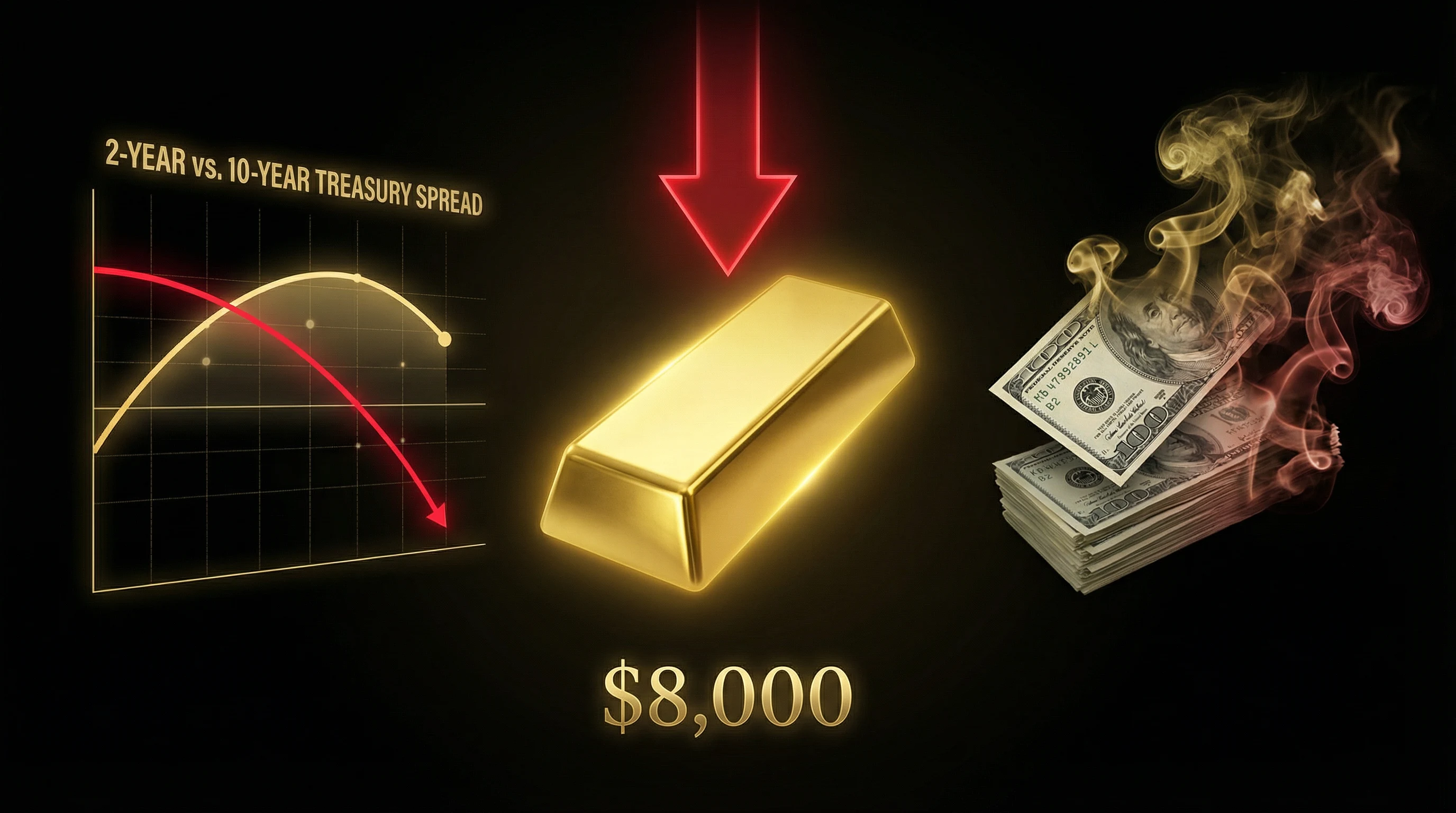
Why Did Gold Drop? The Yield Curve, Stagflation, and the Road to $8,000
لماذا انخفض الذهب؟ منحنى العائد، الركود التضخمي، والطريق إلى 8,000 دولار
Financial Disclaimer: This article is for educational and informational purposes only. It does not constitute financial or investment advice. All investment decisions are solely your responsibility. Past performance does not guarantee future results.
إخلاء المسؤولية المالية: هذا المقال للأغراض التعليمية والتحليلية فقط، ولا يُعد نصيحة مالية أو استثمارية. قرارات البيع والشراء هي مسؤوليتك الشخصية الكاملة. الأداء السابق لا يضمن النتائج المستقبلية.
Gold markets have recently experienced a sharp pullback, causing concern among many investors. However, to understand the full picture, we must look beyond the red screens of price tickers. The secret lies in the global debt market—which exceeds a staggering $350 trillion in declared value alone—and specifically in the world's most critical economic indicator: The US Treasury Yield Curve.
The Yield Curve: The Ultimate Early Warning System
To grasp the current dynamics, one must monitor the spread between the 2-year and 10-year US Treasury yields. Under normal economic conditions, long-term bonds yield more than short-term ones. But what we are witnessing now are violent shifts in this curve.
When the 2-year yield spikes aggressively, it signals that investors are pricing in an imminent economic recession. The relationship is inverse: investors dump 2-year bonds out of near-term fear, driving their prices down and yields up. Conversely, they flock to the safe haven of 10-year bonds, pushing their prices up and yields down. This phenomenon, known as a "Yield Curve Inversion," is historically one of the most accurate predictors of a recession.
Every minor tremor in this chart represents billions of dollars in motion. The global bond market—at over $350 trillion—is the true engine of the global financial system, dwarfing the equity markets that most retail investors focus on.
Why Are Investors Selling Everything, Including Gold?
Previous market expectations pointed to multiple interest rate cuts. Instead, reality delivered a harsh blow: sticky, elevated inflation (partly driven by geopolitical tensions and wars), a labor market showing signs of weakness, and shrinking GDP growth. This toxic combination is the textbook definition of Stagflation.
When recession fears grip the markets, a liquidity crunch ensues. In this phase, investors don't sell what they want to sell; they sell what they can sell to cover margin calls and losses in other asset classes, like equities. This explains the temporary, indiscriminate selling pressure on gold. It is not a rejection of gold's value—it is a forced liquidation driven by panic.
The Stock Market: A Bubble Ready to Burst?
The current decline in equities might just be the beginning. Several macro headwinds are pressuring the markets simultaneously: interest rates remaining "higher for longer," surging oil prices that drastically increase production costs, declining corporate sales coupled with rising unemployment, and extreme stock market valuations that arguably surpass even the peaks of the infamous Dot-com Bubble of the late 1990s.
If the stock market continues to correct or crash, we may see further margin-call-driven selling that temporarily pressures gold prices as investors scramble for cash liquidity.
Why the Pressure on Gold is Temporary: The Road to $8,000
Historically, gold is the ultimate winner in a stagflationary environment. During the stagflation of the 1970s, gold prices skyrocketed by an astonishing 24 times. Therefore, a 10% correction today is merely a consolidation phase—a buying opportunity before the next massive bull run.
The math is inevitable. When a deep recession hits, the US government and the Federal Reserve will have only one playbook left: money printing. The Federal Reserve is projected to print roughly $7 trillion, while the US government is expected to borrow an additional $20 trillion over the next decade. The result is a massive $27 trillion injected into the financial system.
This unprecedented monetary expansion will inevitably debase the US Dollar, potentially eroding its purchasing power by 30% over the next ten years. In such a scenario, forecasts of gold reaching $8,000 per ounce in the next cycle are not just realistic—they might be conservative. Major institutions including JPMorgan have already raised their long-term gold price targets to this range.
Paper Gold vs. Physical Gold: A Critical Distinction
Investors must remember a terrifying reality of modern financial markets: for every ounce of physical gold, there are over 500 "paper gold" contracts traded in the derivatives market. If a crisis of confidence occurs and everyone demands physical delivery simultaneously, the system would default—the physical gold simply isn't there to deliver.
Fiat currencies are structurally designed to lose purchasing power over time, while physical gold remains rare, finite, and universally recognized as a store of value. Every dip is a buying opportunity. Hold onto your physical gold, and if you have excess liquidity, consider accumulating more at these discounted levels.
Conclusion: Patience is the Investor's Greatest Asset
The current gold correction is a temporary phenomenon driven by forced liquidation and recession fears—not a fundamental shift in gold's long-term value proposition. The macro backdrop of massive debt expansion, currency debasement, and stagflation is precisely the environment in which gold has historically delivered its most spectacular returns. The question is not if gold will recover and surpass previous highs, but when.
لماذا انخفض الذهب؟ منحنى العائد، الركود التضخمي، والطريق إلى 8,000 دولار
في تقديري المتواضع، شهدت أسواق الذهب مؤخراً تراجعاً حاداً أثار قلق العديد من المستثمرين، ليس فقط في مصر التي أتابع سوقها عن كثب، بل على مستوى العالم أجمع. لكن دعنا نكن صريحين، لفهم الصورة الكاملة، لا يكفي النظر إلى انخفاض السعر اللحظي أو التقلبات اليومية في شاشات التداول. الأمر يتطلب منا التعمق أكثر في العوامل الاقتصادية الكبرى التي تحرك هذا السوق المعقد، والذي لطالما كان ملاذاً آمناً للكثيرين. السر، كما أرى من خلال خبرتي الطويلة في الأسواق، يكمن في سوق الدين العالمي الذي يتجاوز حجمه 350 تريليون دولار، وفي المؤشرات الاقتصادية التي تعكس حالة الاقتصاد الحقيقي، وعلى رأسها منحنى العائد على سندات الخزانة الأمريكية (منحنى العائد). ألا يبدو هذا مثيراً للاهتمام؟
منحنى العائد: جرس الإنذار المبكر الأدق في العالم، بناءً على خبرتي
يُعتبر منحنى العائد على سندات الخزانة الأمريكية، في رأيي، من أهم المؤشرات الاقتصادية وأكثرها دقة في التنبؤ بالركود. لفهم ما يحدث في الأسواق الحالية، يجب مراقبة الفارق بين عوائد السندات الأمريكية لأجل عامين وعوائد السندات لأجل 10 أعوام. في الظروف الطبيعية، تكون عوائد السندات طويلة الأجل أعلى من قصيرة الأجل، لأن المستثمرين يطلبون تعويضاً أكبر عن المخاطر المرتبطة بفترة استثمارية أطول. هذا أمر بديهي في عالم الاستثمار.
لكن ما نشهده حالياً هو ظاهرة معاكسة تماماً، تعرف بـانعكاس منحنى العائد (انعكاس منحنى العائد). عندما يرتفع عائد السندات قصيرة الأجل بشكل حاد مقارنة بالسندات طويلة الأجل، فهذا يعني أن المستثمرين يتوقعون ركوداً اقتصادياً قريباً. الأمر أشبه بسباق محموم: المستثمرون يبيعون سندات العامين خوفاً من تدهور الأوضاع الاقتصادية، الأمر الذي يرفع عائدها، بينما يهربون إلى سندات العشرة أعوام باعتبارها ملاذاً آمناً، ما يخفض عائدها. هل هذا مؤشر يجب أن نقلق منه؟ بالتأكيد.
هذه الظاهرة ليست مجرد إشارة نظرية، بل تاريخياً سبقت كل ركود اقتصادي كبير في الولايات المتحدة منذ السبعينيات. وتحركات هذه الأرقام تعني تحركات بمليارات الدولارات، وهو ما ينعكس على أسواق الذهب، الأسهم، وحتى العملات. وما يثير القلق هنا هو أن هذه التحركات غالباً ما تمهد لتغيرات جذرية في المشهد الاقتصادي العالمي، ومصر ليست بمنأى عن هذه التأثيرات.
لماذا يبيع المستثمرون كل شيء، بما في ذلك الذهب؟ سؤال يطرح نفسه بقوة
الذهب عادة ما يُعتبر الملاذ الآمن في أوقات الأزمات الاقتصادية والتضخم، لكنه شهد مؤخراً ضغطاً بيعيًا غير متوقع. والسبب في ذلك، من خلال متابعتي للسوق، ليس تراجع القيمة الجوهرية للذهب، بل ظاهرة معروفة في الأسواق المالية تُسمى أزمة السيولة. عندما تخيم مخاوف الركود على الأسواق، يلجأ المستثمرون إلى تصفية أصولهم بسرعة لتغطية خسائر أو طلبات نقدية أخرى. هذا ما نراه يحدث مراراً وتكراراً.
في هذه الحالة، لا يبيع المستثمرون ما يرغبون في بيعه، بل ما يستطيعون بيعه بسرعة. ومع تراجع أسواق الأسهم مثلاً، يضطر البعض إلى بيع الذهب حتى وإن كان ذلك مؤقتًا وغير منطقي من الناحية الاستثمارية، لأن الذهب من الأصول السائلة نسبياً التي يمكن تحويلها إلى نقد بسرعة. هذا يفسر التراجع المؤقت في أسعار الذهب، والذي لا يعكس بالضرورة ضعف الطلب الحقيقي على المعدن الأصفر، بل هو انعكاس لضغط السيولة في بيئة اقتصادية صعبة. هل يجب أن نعتبر هذا فرصة أم تهديداً؟
سوق الأسهم: فقاعة على وشك الانفجار؟ لفت انتباهي هذا الاحتمال
الهبوط الأخير في أسواق الأسهم العالمية لا يمكن فصله عن مسار أسعار الفائدة والتحديات الاقتصادية المتعددة. بقاء أسعار الفائدة مرتفعة لفترة أطول من المتوقع يزيد من تكلفة الاقتراض ويضغط على أرباح الشركات، مما يدفع المستثمرين إلى إعادة تقييم استثماراتهم. وهذا ما يؤثر بشكل مباشر على قرارات الاستثمار في بورصات المنطقة، بما فيها البورصة المصرية.
إضافة إلى ذلك، ارتفاع أسعار النفط والمواد الخام يؤدي إلى زيادة تكاليف الإنتاج، ما ينعكس سلباً على هوامش أرباح الشركات، خاصة في القطاعات الصناعية والتجزئة. ضعف المبيعات وارتفاع معدلات البطالة يزيدان من المخاوف بشأن النمو الاقتصادي. الصورة ليست وردية تماماً.
من ناحية التقييم، فإن العديد من الأسهم تتداول عند مستويات مبالغ فيها، تتجاوز حتى فقاعة "الدوت كوم" الشهيرة في أواخر التسعينيات. وهذا يجعل احتمال حدوث موجة بيع إضافية أمراً محتملاً، مما يزيد الضغط على الذهب كأصل يُباع لتوفير السيولة. فهل نحن على أعتاب تصحيح كبير؟
تحليل أعمق: كيف ينعكس الركود التضخمي على الذهب؟ هذا هو مربط الفرس
الركود التضخمي هو المزيج القاتل بين تباطؤ النمو الاقتصادي وارتفاع معدلات التضخم في نفس الوقت. هذا الوضع يمثل تحدياً كبيراً للمستثمرين وصناع السياسة على حد سواء، لأنه يجمع بين أسوأ سيناريوهين: ركود اقتصادي يؤدي إلى انخفاض في الطلب، وتضخم يقوض القوة الشرائية للنقود. في مصر، على سبيل المثال، نلمس هذا التأثير بشكل مباشر في تآكل القوة الشرائية للجنيه.
تاريخياً، كان الذهب هو الملجأ الأمثل في مثل هذه الأوقات. ففي السبعينيات، عندما شهد العالم ركوداً تضخميًا حاداً، ارتفع سعر الذهب بأكثر من 24 ضعفاً خلال فترة عقد من الزمن. والسبب بسيط للغاية: بينما تفقد العملات الورقية قيمتها بسبب التضخم، يحتفظ الذهب بقيمته، بل ويزداد الطلب عليه كونه ملاذاً آمناً ومخزنًا للقيمة. وهذا ما يجعلني أؤكد دائماً على أهمية الذهب في المحافظ الاستثمارية.
ومع توقع استمرار الضغوط التضخمية وارتفاع الدين العام، يبقى الذهب هو الحصان الرابح في هذه المعادلة الصعبة. فما الذي يجب أن يفعله المستثمر المصري الآن؟
أمثلة عملية من تاريخ الذهب في أزمات سابقة: دروس لا تُنسى
لنأخذ مثالاً من أزمة 2008 المالية، حيث شهد الذهب تذبذبات كبيرة. في البداية، تبع الذهب انهيار أسواق الأسهم هبوطاً حاداً بسبب أزمة السيولة وضغوط البيع، لكن مع تدخل البنوك المركزية وبدء برامج التيسير الكمي، بدأ الذهب في الصعود بقوة وحقق مكاسب كبيرة خلال السنوات التي تلت الأزمة. هذا يذكرنا بأن الصبر مفتاح الفرج في عالم الاستثمار.
مثال آخر هو الأزمة الاقتصادية في اليونان عام 2015، حيث شهد الذهب ارتفاعاً ملحوظاً مع تزايد مخاوف المستثمرين من تفكك منطقة اليورو. هذا يثبت أن الذهب لا يخلو من تقلبات قصيرة الأجل، لكنه يحافظ على مكانته كملاذ آمن في الأوقات الصعبة. بناءً على خبرتي، هذه الأنماط تتكرر.
ماذا يعني هذا للمستثمر المصري؟ رؤيتي الخاصة
في ظل الأوضاع الاقتصادية العالمية والإقليمية، يواجه المستثمر المصري تحديات خاصة، وهذا ما ألمسه في حديثي اليومي مع المتعاملين في الصاغة. فمصر بلد يعتمد بشكل كبير على الاستيراد، ما يجعلها عرضة لتأثيرات التضخم العالمي وارتفاع أسعار السلع الأساسية. بالإضافة إلى ذلك، فإن ارتفاع أسعار الفائدة العالمية قد ينعكس على تكلفة الاقتراض محلياً، مما يؤثر على الشركات والأفراد، ويزيد من الضغط على الجنيه المصري.
بالنسبة للمستثمر المصري في الذهب، هناك عدة نقاط يجب الانتباه لها، وهي نقاط أشدد عليها دائماً في تحليلاتي:
- الذهب كأداة تحوط ضد التضخم: مع تزايد الضغوط التضخمية في مصر، يحتفظ الذهب بقيمته أفضل من العملات المحلية، مما يجعله ملاذاً آمناً للحفاظ على الثروة. أرى أن هذا الجانب يزداد أهمية يوماً بعد يوم.
- الفرق بين الذهب المادي والذهب الورقي: في مصر، يفضل العديد من المستثمرين اقتناء الذهب المادي (سبائك، مصاغ) عوضاً عن الاستثمار في الصناديق أو العقود الورقية، بسبب قلقهم من عدم توفر الذهب للتسليم الفعلي في أوقات الأزمات. وهذا قلق مشروع تماماً.
- التوقيت المناسب للشراء: التراجع الحالي في أسعار الذهب يمكن اعتباره فرصة جيدة لزيادة المراكز، خاصة مع توقعات ارتفاع الأسعار على المدى المتوسط والطويل. هل ستفوت هذه الفرصة؟
- تأثير سعر الدولار: بما أن أسعار الذهب مرتبطة بالدولار في الأسواق العالمية، فإن تحركات سعر صرف الدولار مقابل الجنيه المصري تؤثر بشكل مباشر على السعر المحلي للذهب، ويجب متابعة سياسات البنك المركزي المصري وتأثيرها على سعر الصرف. هذا عامل حاسم في قرارات الشراء والبيع.
نصائح للمستثمر المصري في ظل التقلبات الحالية: من واقع خبرتي كـ تامر الوكيل
أولاً، يجب على المستثمرين عدم الانجراف وراء التقلبات اللحظية للأسواق، بل التفكير في الذهب كجزء من استراتيجية استثمارية طويلة الأجل. التنويع في الأصول وتوزيع المخاطر أمر ضروري في بيئة اقتصادية غير مستقرة. هذا ما تعلمته على مدار سنوات طويلة في هذا المجال.
ثانياً، يُفضل التركيز على الذهب المادي، خاصة في فترات عدم اليقين، حيث يمكن الاحتفاظ به خارج النظام المالي التقليدي، ما يضمن حماية أفضل ضد تقلبات الأسواق المالية. هذه نصيحة أكررها دائماً.
ثالثاً، الاستفادة من التراجع الحالي لزيادة المراكز تدريجياً، وعدم الانتظار لارتفاع الأسعار بشكل كبير، لأن الفرص النادرة تأتي عندما يكون السوق هادئاً أو في حالة هبوط. هل أنت مستعد لاقتناصها؟
وأخيراً، متابعة التطورات الاقتصادية العالمية والمحلية، مع استشارة الخبراء الماليين لتعديل الاستراتيجية حسب المتغيرات، خاصة مع احتمالية تغير السياسات النقدية وأسعار الفائدة. فالأسواق لا تتوقف عن التغير.
الذهب الورقي مقابل الذهب المادي: فارق جوهري يجب أن تفهمه
يجب أن يتذكر كل مستثمر حقيقة هامة في الأسواق المالية الحديثة: مقابل كل أوقية ذهب مادي حقيقية، يُتداول أكثر من 500 عقد "ذهب ورقي" في سوق المشتقات المالية. هذه العقود لا تعني وجود الذهب فعلياً، بل هي رهانات مالية على مستقبل سعر المعدن. هذا الرقم وحده كفيل بأن يثير القلق.
إذا حدثت أزمة ثقة كبيرة وطالب المستثمرون جميعاً باستلام ذهبهم المادي في وقت واحد، فإن السوق قد يواجه نقصاً حاداً في الذهب المادي المتوفر. هذا يبرز أهمية التمسك بالذهب الفعلي، خاصة في أوقات عدم الاستقرار. فهل أنت مستعد لهذا السيناريو؟
العملات الورقية مصممة هيكلياً لتفقد قوتها الشرائية مع مرور الوقت، بينما الذهب المادي نادر ومحدود الكميات ومعترف به عالمياً كمخزن للقيمة. كل هبوط في السعر هو فرصة ذهبية للشراء والاحتفاظ. لا تدع هذه الفرص تفوتك.
الطريق إلى 8,000 دولار: هل هذا ممكن؟ بناءً على تحليلاتي
لغة الأرقام لا تكذب، وهذا ما أؤمن به بشدة. في ظل التوسع الهائل في الديون الحكومية الأمريكية والضغوط التضخمية المستمرة، من المتوقع أن يلجأ الاحتياطي الفيدرالي إلى طباعة كميات ضخمة من النقود خلال العقد القادم. التقديرات تشير إلى أن الفيدرالي قد يطبع حوالي 7 تريليونات دولار، بينما تحتاج الحكومة الأمريكية لاقتراض نحو 20 تريليون دولار إضافية. هذا يعني ضخ 27 تريليون دولار في النظام المالي العالمي، وهو رقم مهول.
هذا التوسع النقدي الكبير سيؤدي حتماً إلى انخفاض كبير في قيمة الدولار الأمريكي، وربما بنسبة تصل إلى 30% خلال عشر سنوات. في هذا السيناريو، يصبح توقع وصول سعر الذهب إلى مستويات 8,000 دولار للأوقية أمراً واقعياً للغاية، بل وربما متحفظاً. وقد رفعت مؤسسات كبرى مثل جي بي مورغان توقعاتها طويلة الأمد لسعر الذهب لتصل إلى هذا النطاق، مستندة إلى تحليلات اقتصادية معمقة. هل هذا هو الوقت المناسب للاستثمار؟
بالطبع، الطريق لن يكون مستقيماً، وسيشهد الذهب تقلبات وانخفاضات مؤقتة، لكنها ستكون فرصاً لاستثمار أفضل وأقوى. تذكر دائماً أن الأسواق تتحرك في دورات.
خلاصة: الصبر هو أعظم أسلحة المستثمر، وهذا ما علمته لي السنوات
التراجع الحالي في أسعار الذهب هو ظاهرة مؤقتة مدفوعة بالتصفية القسرية ومخاوف الركود، وليس تحولاً جوهرياً في القيمة طويلة الأمد للذهب. الخلفية الاقتصادية الكلية، من توسع هائل في الديون، وتدهور في قيمة العملات، وركود تضخمي، هي بالضبط البيئة التي حقق فيها الذهب تاريخياً أعظم عوائده. من خلال متابعتي، هذه هي اللحظات التي يصنع فيها المستثمرون الأذكياء ثرواتهم.
السؤال ليس إذا كان الذهب سيتعافى ويتجاوز مستوياته السابقة، بل متى. المستثمر الحكيم هو من يراكض خلف الذهب في أوقات الهدوء، لا في لحظات الذعر. ولا تنسَ إخراج زكاة مالك، فكما قال النبي ﷺ: "ما نقص مال من صدقة". هذه ليست مجرد نصيحة مالية، بل هي مبدأ حياة.
في النهاية، الذهب هو أكثر من مجرد معدن، إنه تعبير عن الثقة والاستقرار في عالم متغير. استثمر بحكمة، واعتبر كل هبوط فرصة لبداية جديدة. أتمنى لكم كل التوفيق في استثماراتكم.



Reader Comments تعليقات القراء
Leave a Comment اترك تعليقاً
Loading comments...
جارٍ تحميل التعليقات...