Trump and Iran Before the Midterms: How the Ballot Shapes War and Deal-Making
ترامب وإيران قبل انتخابات نوفمبر: كيف تتحكم صناديق الاقتراع في حسابات الحرب والصفقة؟
Financial Disclaimer: This article is for educational and informational purposes only. It does not constitute financial or investment advice. All investment decisions are solely your responsibility. Past performance does not guarantee future results.
إخلاء المسؤولية المالية: هذا المقال للأغراض التعليمية والتحليلية فقط، ولا يُعد نصيحة مالية أو استثمارية. قرارات البيع والشراء هي مسؤوليتك الشخصية الكاملة. الأداء السابق لا يضمن النتائج المستقبلية.
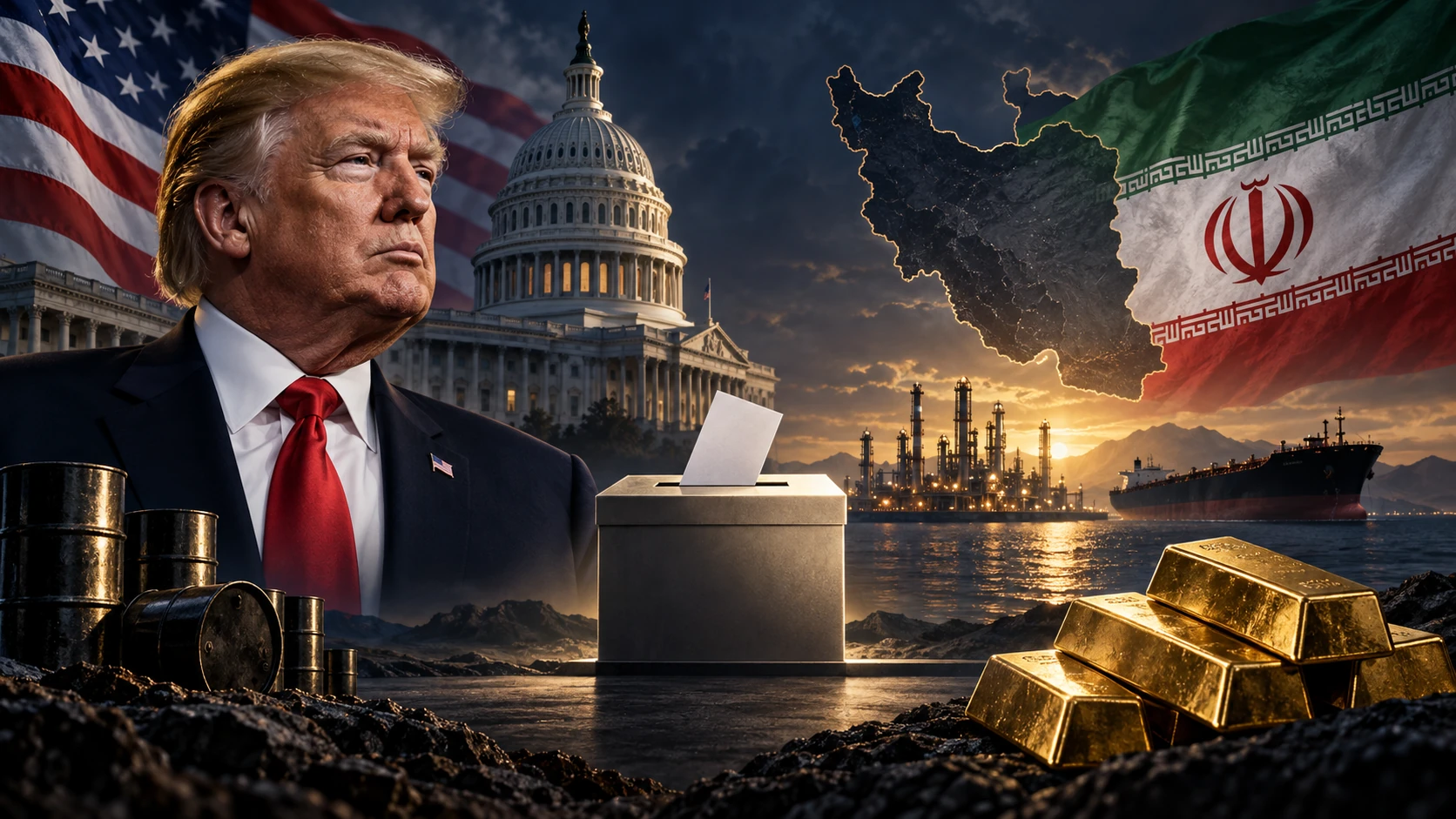
Cover: AI-generated editorial illustration.
Between projecting presidential resolve and containing the cost of war, America's midterm elections are becoming central to the confrontation with Tehran. The consequences extend from control of Congress to oil, gold and living costs in Egypt.
Political and economic analysis — September 27, 2026
The distance between the Strait of Hormuz and an American polling station can sometimes be measured by the number on a gasoline pump. When a distant military confrontation becomes an everyday expense, foreign policy enters a voter's personal calculations: How much am I paying? How has my life changed? Are the war's objectives worth its cost?
That is Donald Trump's dilemma with Iran ahead of the midterm elections on November 3, 2026. He wants to convince Americans that pressure on Tehran protects their security, while his party's candidates need to show that the administration is improving their lives. Those messages become harder to reconcile as the conflict continues and its costs rise. Election date — Federal Election Commission.
In my assessment, the elections will strongly influence the timing, scale and public presentation of American decisions. They will not give Trump complete control over events. Iran, Israel, Washington's allies and developments on the ground can all change the calculation.
The election is already part of the Iran debate
Addressing the UN General Assembly on September 22, Trump predicted an agreement with Iran after the elections, saying Tehran was waiting to see the result. His statement shows how he interprets his adversary's position; it does not by itself establish that waiting is Iran's actual strategy. Reuters, September 22, 2026.
Reuters reported on September 2, citing four people familiar with discussions, that senior aides were pushing to contain escalation until November while leaving open the possibility of considering more intensive operations afterward. The report stressed that a return to full-scale war was not a settled decision. Trump, meanwhile, denied that the election was driving his strategy. Reuters on the administration's calculations.
A further development on September 26 illustrated the obstacles to a settlement. Trump announced that he had rejected an Iranian proposal, conveyed through Qatari mediation, to reopen Hormuz and end the fighting. Reuters reported that the proposal envisaged reopening the waterway and pausing hostilities within seven days, ahead of broader talks. Reuters, September 26, 2026.
Taken together, these developments suggest that electoral incentives for de-escalation do not mean Trump will accept any agreement. He also needs terms he can present as an achievement. Otherwise, the agreement itself could become a source of criticism.
Why an election Trump is not contesting matters
Trump is not a candidate in these elections, but the results will affect his ability to govern during the second half of his term. A supportive congressional majority helps advance his priorities; an opposition majority can increase scrutiny, launch investigations and complicate spending negotiations.
Military funding and the limits on the use of force make this particularly relevant to Iran. Congress has significant legislative and oversight tools, although their use depends on voting coalitions and contested interpretations of presidential authority. A Republican loss in either chamber would not automatically stop military operations, but it could raise their political cost and intensify scrutiny. Congressional Research Service: Understanding the War Powers Resolution.
Timing matters too. The newly elected Congress takes office in January 2027, leaving a period between the results and the new membership's arrival in which the administration can reassess its options.
Projecting strength while avoiding exhaustion
Politically, Trump faces two demands that are not always compatible: demonstrating resolve toward Iran and avoiding an open-ended confrontation that consumes money, military personnel and political attention.
In any administration's calculations, a military strike may bring a political benefit if it achieves a clear objective at limited cost. That benefit can disappear if a painful retaliation follows or operations continue without a result the public can understand.
The White House therefore faces a central question: How can military power produce a political gain that lasts?
Disabling a facility or destroying a target does not provide a complete answer. There must be a broader outcome: safer shipping, reduced threats or verifiable nuclear arrangements. Otherwise, the administration must explain the gap between its claims of success and the crisis the public still sees.
Neither party should be treated as a single bloc. Attitudes toward the conflict intersect with Israel's security, protection of American forces, living costs and the limits of presidential power. These differences create room for negotiation but make durable support harder to assemble.
Gasoline and inflation bring the war home
The economic transmission is direct: disruption to energy supplies puts pressure on fuel prices, which can then feed into transport, production and consumer prices to varying degrees.
The Federal Reserve's July 2026 Monetary Policy Report linked higher energy prices to disrupted shipping through Hormuz and damage to regional infrastructure. The connection between the conflict and household costs was therefore visible in the official economic assessment. Federal Reserve Monetary Policy Report, July 2026.
The United States is a major energy producer, but its consumers still face markets influenced by global prices. Expanding production also requires time, investment and transport and refining capacity. These do not respond as quickly as military headlines.
An additional electoral problem follows: late de-escalation may leave too little time for households to feel an improvement before voting. Oil can fall immediately on diplomatic progress, while the effect on some goods and services takes longer to arrive.
Calmer markets alone are therefore insufficient. Any improvement needs to be tangible and sustained to become a political asset.
A harder test for the Federal Reserve
Persistently expensive energy can create an uncomfortable combination of inflation pressure and weaker consumption and economic activity.
Federal Reserve Vice Chair Philip Jefferson discussed this dilemma in July, explaining how supply shocks exert conflicting pressures on inflation and activity. This complicates the monetary response. Jefferson on navigating economic shocks.
Analytically, a temporary energy shock may justify looking beyond its immediate effect. If it influences inflation expectations and pricing behavior, however, monetary easing may become harder to deliver at the pace the administration would prefer.
The White House could then face two political costs at once: expensive everyday necessities and expensive borrowing for households and businesses. An election intensifies the desire for rapid improvement without removing the economic trade-off.
Sanctions have costs of their own
Sanctions can appear attractive before an election because they signal continued resolve while reducing the need for large military operations. Their effectiveness, however, depends on enforcement, cooperation from partners and Iran's ability to find alternative trade and payment channels.
Tighter restrictions on energy exports can create a difficult economic balance: reducing an adversary's revenue while adding pressure to prices paid by American consumers. The scale of that effect depends on the volumes affected and other producers' ability to compensate.
Pressure also needs a clear negotiating purpose. Without an understandable relationship between the concessions sought and the relief available, it becomes harder to turn economic costs into an agreement.
Civilian costs belong in the assessment as well. Banks and shipping companies may hesitate even over some permitted transactions because of perceived risk. Falling household income and difficulties obtaining goods must be considered alongside government calculations.
How Iran may read the electoral clock
Tehran may see the approaching election as an opportunity to improve its terms. Each additional week of elevated costs could increase pressure on the American administration.
Waiting also carries the opposite risk. If Trump believes Iran is deliberately exploiting the timing, he may hold to tougher conditions. After the vote, part of the immediate electoral constraint could recede, changing the calculation over military force.
Iran cannot defer the economic and social costs of the conflict until November. Pressure on revenue, investment and services creates real burdens even when it does not immediately change political decisions.
Trust remains a central obstacle. Tehran needs confidence that an agreement's economic benefits will last, while Washington needs verifiable Iranian commitments. A settlement's design and implementation matter as much as the moment of its announcement.
The nuclear question limits a quick deal
Arrangements to reduce fighting or improve navigation could precede a comprehensive nuclear settlement. A broader agreement, however, needs to address inspections, nuclear material and reciprocal commitments.
In a joint statement to the IAEA Board of Governors in September, the United States, Britain, France and Germany expressed concern over restrictions on verification and access to Iranian facilities and material. This is those governments' official position and should be distinguished from independent conclusions about possession of a nuclear weapon. Joint statement, September 2026.
Insufficient verification increases uncertainty without establishing unproven conclusions. Equally, announcing an agreement without credible monitoring could postpone the crisis while leaving its causes unresolved.
The campaign's preference for a quick announcement can therefore clash with the detail and assurances a durable security arrangement requires.
Israel, the Gulf and China can change the calculation
Washington and Tehran are not the only actors shaping this confrontation.
For Israel, assessments of the Iranian threat remain important to security decisions. Its preferred timing for action may differ from Washington's. A major operation or response could force the United States to confront choices it had hoped to avoid before the election.
For Gulf states, deterrence intersects with protection of cities, facilities, ports and investment. A higher oil price does not guarantee a benefit when exports are disrupted or insurance becomes more expensive. De-escalation supported by security assurances may therefore be more valuable than continuing confrontation.
For China and other powers, energy needs, trade and regional relationships shape their approach to sanctions and mediation. Effective economic pressure is difficult to assess without considering buyers, transport networks and international finance.
The stakes are substantial. Oil flows through Hormuz averaged 20 million barrels a day in 2024, equivalent to roughly one-fifth of global petroleum liquids consumption. This is a prewar reference figure, not an estimate of current flows. U.S. Energy Information Administration.
Three possible paths before and after the vote
The following are analytical scenarios rather than settled forecasts.
| Scenario | Political calculation | Potential economic effect |
|---|---|---|
| Contained escalation with continued pressure | Reduce costly surprises before voting while maintaining a firm public position | Continued volatility and a persistent risk premium |
| An implementable interim understanding | Deliver a concrete security or shipping achievement before a comprehensive settlement | Possible easing of energy pressures and improved confidence |
| Wider escalation following failed talks or a military development | Present retaliation as a security necessity while accepting significant electoral risk | Greater pressure on supplies, inflation and growth |
There is no automatic relationship between the election result and the direction of the war. Continued Republican control might encourage a tougher stance, but it could also give Trump room to sell an agreement as the product of strength. A defeat could prompt de-escalation to limit costs, or a harder position intended to demonstrate resolve.
The decisive questions will be how the administration interprets the result and what military and diplomatic options are available at that moment.
Implications for gold and Egypt
For readers following gold, the simple rule that escalation always lifts the metal can be misleading.
Fear can support safe-haven demand while a stronger dollar and higher real yields exert pressure in the opposite direction. Investors may also sell gold temporarily to raise cash during periods of stress.
De-escalation can reduce demand driven by fear, while lower inflation and changing interest-rate expectations can support gold through another channel. The metal should therefore be read alongside currencies and bonds.
For Egypt, several potential transmission channels matter:
- Energy and imports: Higher international costs can pressure the import bill, transport and production.
- Foreign currency: Larger import needs or weaker inflows may pressure the exchange market, depending on how far other sources compensate.
- Shipping and tourism: Disruption extending into the Red Sea or broader regional concerns can affect important revenues and inflows.
- Local gold: Prices reflect the interaction of international bullion, the dollar-pound exchange rate and domestic supply and demand.
Gold can consequently fall in dollar terms while remaining expensive in Egyptian pounds if the exchange rate moves the other way. A durable easing of tensions could also reduce several sources of pressure at once.
What to watch through November
Indicators that reveal changes on the ground deserve more attention than the tone of public statements:
- Vessel traffic, insurance costs and actual improvements in navigation.
- American fuel prices and inflation trends.
- Progress in mediation and clear implementation arrangements.
- Congressional decisions on funding and oversight.
- The ability to verify nuclear commitments.
- The scale of attacks and responses, especially those involving American forces or energy infrastructure.
Rhetoric can remain harsh while negotiations advance. Optimistic statements can also appear without a meaningful change in conditions.
The election changes the cost of each decision
In my assessment, the midterms increase Trump's incentive to avoid open-ended attrition. They also increase his need to show that any settlement contains terms he can defend to his supporters.
That combination could encourage a limited understanding that reduces costs. It could obstruct an agreement if each side fears appearing to retreat. The most dangerous moment may come when one side assumes the election constrains the other and applies more pressure than its opponent can tolerate.
Markets will judge statements against practical results: Are supplies improving? Are shipping costs falling? Can security arrangements endure?
American ballots will not determine the confrontation with Iran on their own. They will change the political cost of each decision Trump makes—and that cost can reach consumers and investors far beyond the United States.
الغلاف: تصوّر تحريري مولّد بالذكاء الاصطناعي.
بين الحفاظ على صورة الرئيس الحاسم والخوف من فاتورة الحرب، تدخل الانتخابات النصفية الأمريكية إلى قلب المواجهة مع طهران. والنتيجة قد تمتد من توازنات الكونغرس إلى أسعار النفط والذهب وتكلفة المعيشة في مصر.
تحليل سياسي واقتصادي — 27 سبتمبر 2026
قد يبدو الطريق من مضيق هرمز إلى مراكز الاقتراع الأمريكية طويلًا، لكنه يختصر أحيانًا في الرقم الذي يراه المواطن على ماكينة البنزين. فحين تتحول مواجهة عسكرية بعيدة إلى فاتورة يومية، تصبح السياسة الخارجية جزءًا من الحسابات الشخصية للناخب: كم يدفع؟ وكيف تغيرت معيشته؟ وهل تستحق أهداف الحرب هذا الثمن؟
هنا تكمن معضلة دونالد ترامب مع إيران قبل الانتخابات النصفية المقررة في 3 نوفمبر 2026. فهو يريد إقناع الأمريكيين بأن الضغط على طهران يحمي أمنهم، بينما يحتاج مرشحو حزبه إلى إقناعهم بأن سياسات الإدارة تحسن حياتهم. وقد يصعب الجمع بين الرسالتين إذا استمرت الحرب وارتفعت تكلفتها. موعد الانتخابات — لجنة الانتخابات الفيدرالية.
في تقديري، ستؤثر الانتخابات بقوة في توقيت القرارات الأمريكية، وحجمها، والطريقة التي يقدمها بها ترامب للرأي العام. لكنها لا تمنحه سيطرة كاملة على مسار المواجهة؛ فإيران وإسرائيل وحلفاء واشنطن، فضلًا عن التطورات الميدانية، يملكون بدورهم القدرة على تغيير الحسابات.
الانتخابات حاضرة بالفعل في الملف الإيراني
في خطابه أمام الجمعية العامة للأمم المتحدة يوم 22 سبتمبر، توقع ترامب التوصل إلى اتفاق مع إيران بعد الانتخابات، وقال إن طهران تنتظر معرفة نتائجها. هذا التصريح يوضح كيف يقرأ الرئيس الأمريكي موقف خصمه، لكنه لا يثبت وحده أن الانتظار هو الاستراتيجية الإيرانية الفعلية. رويترز، 22 سبتمبر 2026.
وفي المقابل، نقلت رويترز في 2 سبتمبر عن أربعة أشخاص مطلعين أن مساعدين بارزين لترامب يدفعون نحو احتواء التصعيد حتى نوفمبر، مع احتمال دراسة تكثيف العمليات بعد التصويت. وأكد التقرير أن العودة إلى حرب واسعة ليست قرارًا محسومًا، بينما نفى ترامب أن تكون الانتخابات هي التي توجه استراتيجيته. تقرير رويترز عن حسابات الإدارة.
ثم جاء تطور 26 سبتمبر ليكشف صعوبة التسوية: أعلن ترامب رفض مقترح إيراني لإعادة فتح مضيق هرمز وإنهاء القتال، كانت طهران قد طرحته عبر وساطة قطرية. وبحسب رويترز، تضمن المقترح مسارًا لفتح المضيق ووقف الأعمال القتالية خلال سبعة أيام، تمهيدًا لمحادثات أوسع. رويترز، 26 سبتمبر 2026.
قراءة هذه الوقائع معًا تقود إلى استنتاج مهم: الحاجة الانتخابية إلى التهدئة لا تعني استعداد ترامب لقبول أي اتفاق. فهو يحتاج أيضًا إلى شروط يستطيع تقديمها باعتبارها إنجازًا، وإلا خاطر بأن يتحول الاتفاق نفسه إلى مادة لانتقاده.
لماذا تهم انتخابات لا يترشح فيها ترامب؟
ترامب ليس مرشحًا في هذه الانتخابات، لكن قدرته على الحكم خلال النصف الثاني من ولايته تتأثر بنتائجها. فأغلبية داعمة في الكونغرس تسهل تمرير أولوياته، بينما تستطيع أغلبية معارضة زيادة الرقابة، وفتح التحقيقات، وتعقيد معارك الإنفاق.
وفي الملف الإيراني، تصبح هذه المسألة أكثر حساسية بسبب التمويل العسكري وحدود استخدام القوة. يملك الكونغرس أدوات تشريعية ورقابية مؤثرة، لكن ممارستها تصطدم بتوازنات التصويت والخلافات حول صلاحيات الرئيس. لذلك، فإن خسارة الجمهوريين أحد المجلسين لن توقف العمليات تلقائيًا، لكنها قد ترفع كلفتها السياسية وتجعل استمرارها موضع مساءلة أشد. خدمة أبحاث الكونغرس: فهم قرار صلاحيات الحرب.
ويجب الانتباه إلى عامل التوقيت: الكونغرس المنتخب يبدأ عمله في يناير 2027. وبين إعلان النتائج وتولي الأعضاء الجدد مهامهم، تبقى مساحة زمنية تستطيع الإدارة خلالها إعادة ترتيب خياراتها.
صورة القوة في مواجهة الخوف من الاستنزاف
من الناحية السياسية، يواجه ترامب مطلبين يصعب التوفيق بينهما دائمًا: إظهار الحزم تجاه إيران، وتجنب مواجهة مفتوحة تستهلك المال والجنود والاهتمام السياسي.
تزداد قيمة الضربة العسكرية انتخابيًا، في حسابات أي إدارة، إذا حققت هدفًا واضحًا بتكلفة محدودة. لكن هذه القيمة قد تنقلب سريعًا إذا أعقبها رد مؤلم أو استمرت العمليات دون نتيجة يستطيع المواطن فهمها.
ولهذا أرى أن السؤال الذي يواجه البيت الأبيض هو: كيف يحوّل القوة العسكرية إلى مكسب سياسي قابل للاستمرار؟
تعطيل منشأة أو تدمير هدف لا يكفي وحده للإجابة. يجب أن تظهر نتيجة أوسع: أمن أفضل للملاحة، تراجع للتهديدات، أو ترتيبات يمكن التحقق منها بشأن البرنامج النووي. وإلا أصبحت الإدارة مطالبة بتفسير الفجوة بين ما تعلنه من نجاحات وما يراه الجمهور من استمرار للأزمة.
كذلك، لا يجوز افتراض أن جميع الجمهوريين يريدون الدرجة نفسها من التصعيد، أو أن جميع الديمقراطيين يفضلون الاتفاق نفسه. فالموقف من الحرب يتداخل مع أمن إسرائيل، وحماية القوات الأمريكية، وكلفة المعيشة، وحدود السلطة الرئاسية. هذه الاختلافات تمنح ترامب مجالًا للمناورة، لكنها تجعل بناء تأييد مستقر أكثر صعوبة.
البنزين والتضخم: كيف تتحول الحرب إلى قضية داخلية؟
تصل تداعيات المواجهة إلى الناخب الأمريكي عبر مسار مباشر: اضطراب إمدادات الطاقة يضغط على أسعار الوقود، ثم ينتقل بدرجات متفاوتة إلى النقل والإنتاج والأسعار النهائية.
وقد ربط تقرير السياسة النقدية الصادر عن الاحتياطي الفيدرالي في يوليو 2026 ارتفاع أسعار الطاقة بتعطل الشحن عبر هرمز والأضرار التي لحقت بالبنية التحتية في المنطقة. وهذا يعني أن الرابط بين الحرب ومعيشة المواطن أصبح ظاهرًا في التقييم الاقتصادي الرسمي. تقرير الاحتياطي الفيدرالي، يوليو 2026.
صحيح أن الولايات المتحدة منتج كبير للطاقة، لكن المستهلك الأمريكي يتعامل مع سوق تتأثر بالأسعار العالمية. كما أن زيادة الإنتاج تحتاج إلى وقت واستثمارات وقدرات للنقل والتكرير؛ وهي أمور لا تتحرك بالسرعة نفسها التي تتحرك بها الأخبار العسكرية.
وتظهر هنا مشكلة انتخابية إضافية: التهدئة المتأخرة قد لا تمنح المواطن وقتًا كافيًا للشعور بتحسن معيشته قبل التصويت. فقد تنخفض أسعار النفط في الأسواق فور إعلان تقدم دبلوماسي، بينما يستغرق انتقال الانخفاض إلى بعض السلع والخدمات مدة أطول.
لذلك، لا يكفي أن تسعى الإدارة إلى تهدئة الأسواق. يجب أن يكون التحسن ملموسًا ومستمرًا حتى يتحول إلى رصيد سياسي.
الفيدرالي أمام اختبار أصعب
إذا استمر ارتفاع الطاقة، قد يجد الاحتياطي الفيدرالي نفسه أمام مزيج مزعج: ضغط تضخمي مصحوب بتباطؤ في الاستهلاك والنشاط الاقتصادي.
وقد ناقش نائب رئيس الفيدرالي فيليب جيفرسون هذه المعضلة في يوليو، موضحًا أن صدمات العرض تخلق ضغوطًا متعاكسة على التضخم والنشاط. وهذا يحد من بساطة الاستجابة النقدية. خطاب جيفرسون عن الصدمات الاقتصادية.
تحليليًا، إذا كانت صدمة الطاقة مؤقتة، فقد يكون من المناسب النظر إلى ما بعدها. أما إذا انتقلت إلى توقعات التضخم وسلوك التسعير، فقد يصعب تخفيف السياسة النقدية بالسرعة التي تتمناها الإدارة.
وبذلك قد يدفع البيت الأبيض ثمنًا سياسيًا مزدوجًا: ارتفاع تكلفة المعيشة، وبقاء الاقتراض مكلفًا للأسر والشركات. الانتخابات تزيد الرغبة في تحسن سريع، لكنها لا تزيل هذه المفاضلة.
العقوبات: ضغط أقل ظهورًا من الحرب، لكنه ليس بلا تكلفة
قد تبدو العقوبات أداة مناسبة لفترة ما قبل الانتخابات: تظهر استمرار التشدد وتقلل الحاجة إلى عمليات عسكرية واسعة. لكن فعاليتها تتوقف على التنفيذ، وتعاون الشركاء، وقدرة إيران على إيجاد منافذ للتجارة والتحويلات.
اقتصاديًا، يمكن أن يؤدي تشديد القيود على صادرات الطاقة إلى مفارقة: تقليص موارد الخصم، مع زيادة الضغط على أسعار الطاقة التي يدفعها المستهلك الأمريكي. ويتوقف حجم هذا الأثر على الكميات المتأثرة وقدرة المنتجين الآخرين على التعويض.
كما أن العقوبات تحتاج إلى هدف تفاوضي واضح. فكلما غابت العلاقة بين التنازلات المطلوبة والتخفيف الممكن، أصبح من الأصعب تحويل الضغط إلى اتفاق.
وهناك تكلفة إنسانية أيضًا؛ إذ قد تتردد البنوك وشركات الشحن في التعامل حتى مع بعض الأنشطة المسموح بها خوفًا من المخاطر. وفي أي تقييم جاد، ينبغي احتساب ما يتحمله المدنيون من تراجع الدخل وصعوبة الحصول على السلع، إلى جانب حسابات الحكومات.
كيف تقرأ إيران الساعة الانتخابية؟
قد ترى طهران في اقتراب الانتخابات فرصة لتحسين شروطها: كل أسبوع إضافي من ارتفاع التكلفة يمكن أن يزيد الضغط على الإدارة الأمريكية.
لكن الانتظار يحمل مخاطرة معاكسة. فإذا اعتقد ترامب أن إيران تتعمد استغلال حساسية التوقيت، فقد يتمسك بشروط أكثر تشددًا. وبعد التصويت، قد يزول جزء من القيد الانتخابي المباشر، فتتغير حسابات استخدام القوة.
كما أن إيران لا تستطيع تأجيل تكلفة الحرب على اقتصادها ومجتمعها إلى ما بعد نوفمبر. فالضغط على الإيرادات والاستثمار والخدمات يراكم أعباء حقيقية، حتى لو لم يترجم فورًا إلى تغيير في القرار السياسي.
وتبقى الثقة عقدة أساسية: تحتاج طهران إلى الاطمئنان إلى استمرار المنافع الاقتصادية لأي اتفاق، بينما تحتاج واشنطن إلى ضمان أن الالتزامات الإيرانية قابلة للتحقق. نجاح التسوية يتوقف على تصميمها وتنفيذها، بقدر ما يتوقف على لحظة إعلانها.
الملف النووي يضع حدودًا لأي صفقة سريعة
يمكن التوصل إلى ترتيبات لخفض الاشتباكات أو تحسين الملاحة قبل حل كل الخلافات النووية. لكن اتفاقًا أوسع يحتاج إلى معالجة مسائل التفتيش والمواد النووية وطبيعة الالتزامات المتبادلة.
وفي بيان مشترك أمام مجلس محافظي الوكالة الدولية للطاقة الذرية في سبتمبر، أعربت الولايات المتحدة وبريطانيا وفرنسا وألمانيا عن قلقها من قيود التحقق والوصول إلى المنشآت والمواد الإيرانية. وهذا موقف رسمي لهذه الحكومات ينبغي تمييزه عن الاستنتاجات المستقلة بشأن امتلاك سلاح نووي. البيان الرباعي، سبتمبر 2026.
غياب القدرة الكافية على التحقق يزيد الشكوك، لكنه لا يسمح بالقفز إلى نتائج غير مثبتة. وفي المقابل، فإن إعلان اتفاق دون آلية رقابة موثوقة قد يؤجل الأزمة ويترك أسبابها قائمة.
هنا يتعارض إيقاع الحملة الانتخابية، الذي يفضل الإعلان السريع، مع إيقاع التسويات الأمنية، الذي يحتاج إلى تفاصيل وضمانات.
إسرائيل والخليج والصين: أطراف تستطيع تغيير الحسابات
لا تُدار المواجهة بإرادة واشنطن وطهران وحدهما.
بالنسبة لإسرائيل، يظل تقييم الخطر الإيراني عاملًا مؤثرًا في القرارات الأمنية. وقد يختلف توقيت التحرك الذي تراه مناسبًا عن التوقيت المفضل أمريكيًا. وأي عملية أو رد واسع يمكن أن يضع واشنطن أمام خيارات لم تكن تريد مواجهتها قبل الانتخابات.
وبالنسبة لدول الخليج، يتداخل ردع التهديدات مع حماية المدن والمنشآت والموانئ والاستثمارات. ارتفاع سعر النفط لا يضمن مكسبًا إذا تعذر تصديره أو ارتفعت كلفة تأمينه. لذلك، قد تكون التهدئة المصحوبة بضمانات أمنية أكثر قيمة من استمرار مواجهة مفتوحة.
أما الصين والقوى الأخرى، فتدخل مصالحها في الطاقة والتجارة وعلاقاتها الإقليمية ضمن حسابات العقوبات والوساطة. ومن زاوية تحليلية، يصعب بناء ضغط اقتصادي فعال دون مراعاة سلوك المشترين وشبكات النقل والتمويل الدولية.
وتوضح الأرقام حجم الرهان: بلغ تدفق النفط عبر هرمز نحو 20 مليون برميل يوميًا في 2024، بما يعادل قرابة خُمس الاستهلاك العالمي للسوائل النفطية. وهذا رقم مرجعي سابق للحرب، وليس تقديرًا للتدفقات الحالية. إدارة معلومات الطاقة الأمريكية.
ما الذي قد يحدث قبل الانتخابات وبعدها؟
في ضوء هذه المعطيات، أرى ثلاثة مسارات رئيسية. وهي سيناريوهات تحليلية، وليست توقعات محسومة.
| السيناريو | حساباته السياسية | أثره الاقتصادي المحتمل |
|---|---|---|
| احتواء التصعيد مع استمرار الضغط | تقليل المفاجآت المكلفة قبل التصويت مع الحفاظ على خطاب الحزم | استمرار التقلبات وبقاء جزء من تكلفة المخاطر |
| تفاهم مرحلي قابل للتنفيذ | تقديم إنجاز ملموس في الملاحة أو الأمن دون انتظار تسوية شاملة | تراجع محتمل لضغوط الطاقة وتحسن الثقة |
| تصعيد واسع بسبب فشل التفاوض أو تطور ميداني | تقديم الرد بوصفه ضرورة أمنية، مع تحمل مخاطرة انتخابية كبيرة | ضغوط أكبر على الإمدادات والتضخم والنمو |
وبعد الانتخابات، لا توجد علاقة آلية بين النتيجة واتجاه الحرب. احتفاظ الجمهوريين بالسيطرة قد يشجع ترامب على التشدد، لكنه قد يمنحه أيضًا مساحة لتسويق اتفاق باعتباره ثمرة للقوة. وخسارتهم قد تدفعه إلى التهدئة لتقليل التكلفة، أو إلى موقف أكثر حدة لإثبات أنه لم يتراجع.
العامل الأهم سيكون كيف تفسر الإدارة النتيجة، وما الخيارات المتاحة ميدانيًا ودبلوماسيًا عندها.
ماذا يعني ذلك للذهب والاقتصاد المصري؟
بالنسبة لقارئ أسواق الذهب، فإن اختزال الصورة في قاعدة «التصعيد يرفع الذهب» قد يكون مضللًا.
تحليليًا، يدعم الخوف الطلب على الملاذات الآمنة، لكن ارتفاع الدولار والعوائد الحقيقية قد يضغط على المعدن في الوقت نفسه. وقد تحدث مبيعات مؤقتة للحصول على السيولة حتى أثناء اشتداد القلق.
وبالمثل، قد تخفض التهدئة الطلب المرتبط بالخوف، بينما يدعم تراجع التضخم وتوقعات الفائدة الذهب عبر قناة مختلفة. لذلك، ينبغي قراءة حركة المعدن إلى جانب الدولار والسندات، لا بمعزل عنهما.
وفي مصر، ينتقل الأثر عبر عدة قنوات محتملة:
- الطاقة والاستيراد: ارتفاع التكلفة العالمية قد يزيد الضغط على فاتورة الواردات والنقل والإنتاج.
- النقد الأجنبي: اتساع احتياجات الاستيراد أو تراجع بعض التدفقات قد يضغط على سوق الصرف، بحسب قدرة الموارد الأخرى على التعويض.
- الملاحة والسياحة: امتداد الاضطراب إلى البحر الأحمر أو اتساع المخاوف الإقليمية قد يؤثر في إيرادات وتدفقات مهمة.
- الذهب المحلي: يتحرك بتفاعل سعر الأونصة عالميًا، والدولار مقابل الجنيه، والعرض والطلب داخل السوق.
ولهذا يمكن أن يتراجع الذهب بالدولار، بينما يظل مرتفعًا بالجنيه إذا تحرك سعر الصرف في الاتجاه المقابل. ويمكن أيضًا أن تؤدي تهدئة مستدامة إلى تخفيف أكثر من مصدر للضغط في الوقت نفسه.
ما الذي يستحق المتابعة حتى نوفمبر؟
الأفضل متابعة مؤشرات تكشف تغير الواقع، بدلًا من الاكتفاء بنبرة التصريحات:
- حركة السفن وكلفة التأمين، ومدى تحسن الملاحة فعليًا.
- أسعار الوقود واتجاهات التضخم داخل الولايات المتحدة.
- تقدم الوساطة وظهور ترتيبات تنفيذ واضحة.
- قرارات الكونغرس المتعلقة بالتمويل والرقابة.
- إمكانية التحقق من الالتزامات النووية.
- حجم العمليات والردود، خاصة إذا مست القوات الأمريكية أو البنية التحتية للطاقة.
فالخطاب قد يبقى حادًا أثناء تقدم المفاوضات، وقد تصبح التصريحات أكثر تفاؤلًا دون أن يتغير شيء على الأرض.
الخلاصة: الانتخابات تغيّر ثمن القرار
في تقديري، تزيد الانتخابات النصفية حافز ترامب لتجنب استنزاف مفتوح، لكنها تزيد أيضًا حاجته إلى إظهار أن أي تسوية جاءت بشروط يستطيع الدفاع عنها أمام جمهوره.
هذه المعادلة قد تشجع على تفاهم محدود يخفف التكلفة، وقد تعرقل اتفاقًا إذا خشي كل طرف أن يبدو متراجعًا. وتبقى أخطر لحظة حين يعتقد أحدهما أن الآخر مقيد بالانتخابات، فيرفع مستوى الضغط أكثر مما يستطيع الطرف المقابل احتماله.
أما الأسواق، فستختبر التصريحات بمقاييس عملية: هل تتحسن الإمدادات؟ هل تنخفض كلفة الشحن؟ وهل توجد ترتيبات أمنية قابلة للاستمرار؟
لن تحسم صناديق الاقتراع الأمريكية وحدها مستقبل المواجهة مع إيران، لكنها ستغيّر الثمن السياسي لكل قرار يتخذه ترامب. وهذا الثمن قد يصل إلى المستهلك والمستثمر أبعد كثيرًا من حدود الولايات المتحدة.



Reader Comments تعليقات القراء
Leave a Comment اترك تعليقاً
Loading comments...
جارٍ تحميل التعليقات...